Are Banana Chips Healthy? The Nutrition Facts Explained
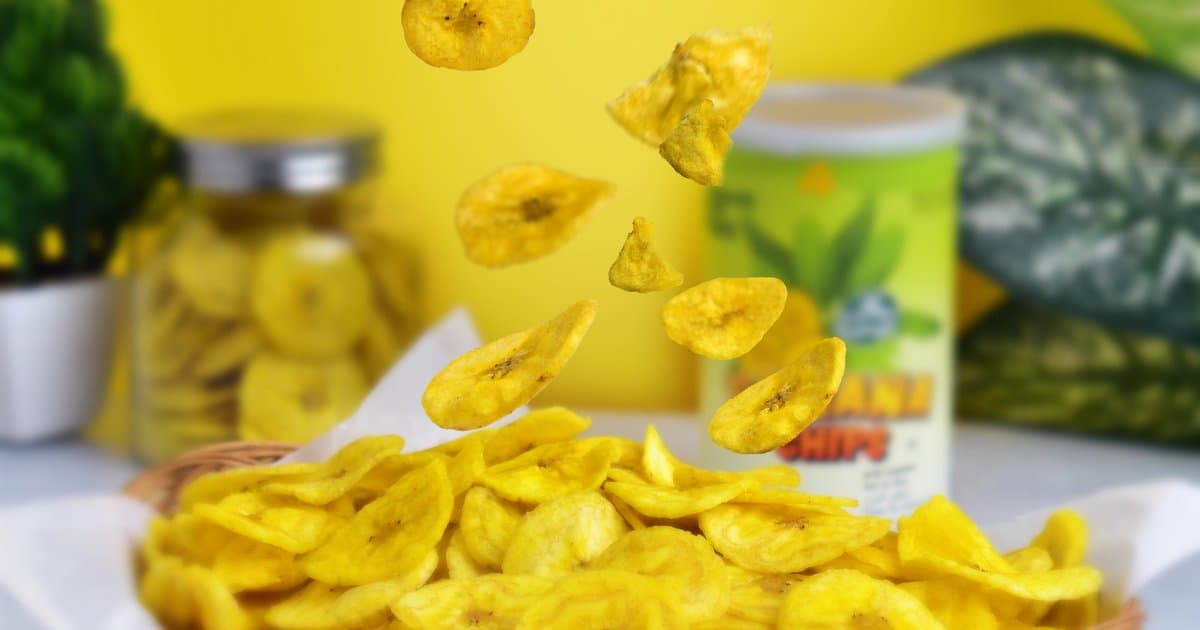
Whether banana chips are healthy is a question most people answer based on marketing rather than facts. The honest answer depends on what the chips are made from, which oil they were fried in, and how they compare to the alternatives. Banana chips made from Nendran bananas and fried in fresh coconut oil start with a different set of ingredients than most commercial snacks, and that difference shows up clearly in the nutrition data. This article covers the actual numbers, explains what they mean in practice, and gives you a clear way to evaluate any banana chip before you buy.
Key Takeaways
- Authentic Kerala banana chips contain four clean ingredients: Nendran banana, fresh coconut oil, rock salt, and turmeric. No flavour enhancers, no preservatives, and no unnamed oil blends.
- The oil used in frying determines the fat profile of the chip. Coconut oil produces a structurally different fat compared to the refined vegetable oils used in most commercial banana chips.
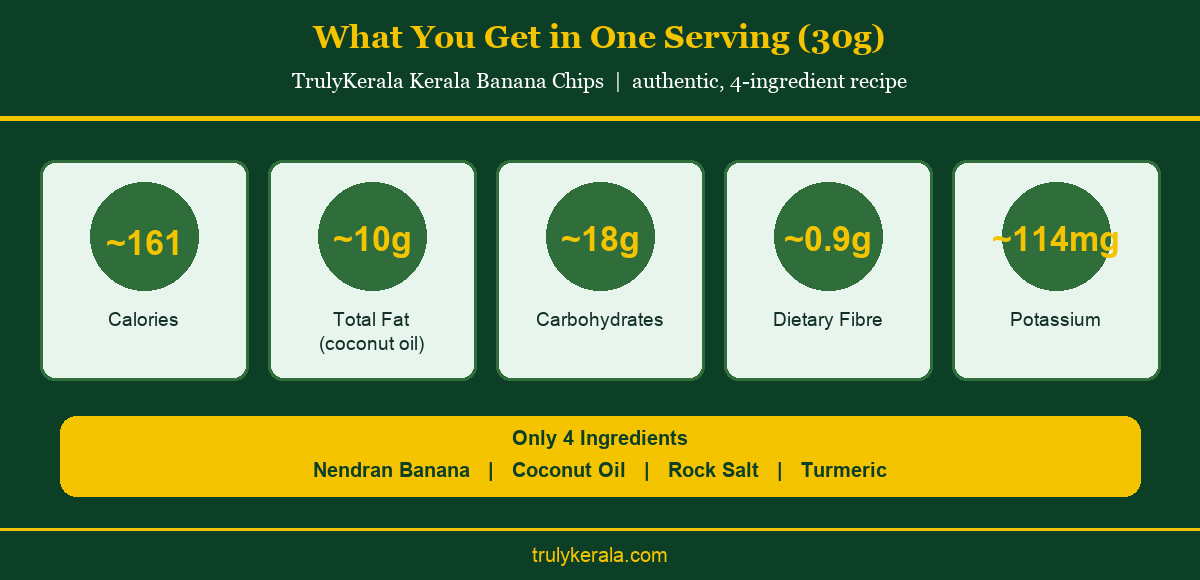
- At a 30g serving size, authentic Kerala banana chips provide approximately 161 kilocalories alongside natural potassium, dietary fibre, and curcumin from turmeric.
What the Nutrition Facts Actually Say
Banana chips are a calorie-dense food. A 100g serving of authentic Kerala banana chips contains approximately 536 kilocalories, which puts them in the same range as most fried snacks. The calorie count comes primarily from fat absorbed during frying, not from the banana itself. Carbohydrates account for roughly 59 grams per 100g, with around 6 grams coming from the natural sugars present in the Nendran banana. Dietary fibre contributes approximately 3 grams per 100g, supporting digestion. Potassium, one of the key minerals in banana-based foods, comes in at around 380 milligrams per 100g.
What these numbers do not tell you is what kind of ingredients produced them. Two packets of banana chips with identical calorie counts can be very different products depending on whether they were made from a quality banana variety, which oil was used, and whether anything was added beyond the essential ingredients. The label tells you more than the calorie figure alone. Banana chips are not all the same snack, and understanding the raw material that goes into them is the starting point for a fair assessment. To understand how the banana variety affects the finished chip, read Nendran Banana Chips vs Regular: The Key Differences.
Why the Oil Changes the Equation
The oil a chip is fried in determines its fat profile and how it performs nutritionally. Most commercial banana chips are fried in refined palm oil or blended vegetable oil. These oils are high in omega-6 fatty acids and, when reused across multiple frying batches, accumulate oxidised compounds that affect both taste and nutritional quality. Chips fried in reused or degraded oil absorb more fat during the frying process, and that absorbed fat carries the characteristics of the oil that produced it.
Authentic Kerala banana chips made using traditional recipes use fresh coconut oil. Coconut oil is composed primarily of saturated fat, specifically medium-chain triglycerides (MCTs) with lauric acid as the dominant fatty acid. Research available through the National Institutes of Health confirms that MCTs are metabolised differently from the long-chain fats in most refined oils, being processed more efficiently by the liver rather than the lymphatic system. Coconut oil is also more stable at frying temperatures, producing fewer oxidation byproducts in the finished chip. For a detailed explanation of how the oil type affects the chip you eat, read Why Coconut Oil Makes Kerala Banana Chips Healthier.
Banana Chips vs Potato Chips: A Fair Comparison
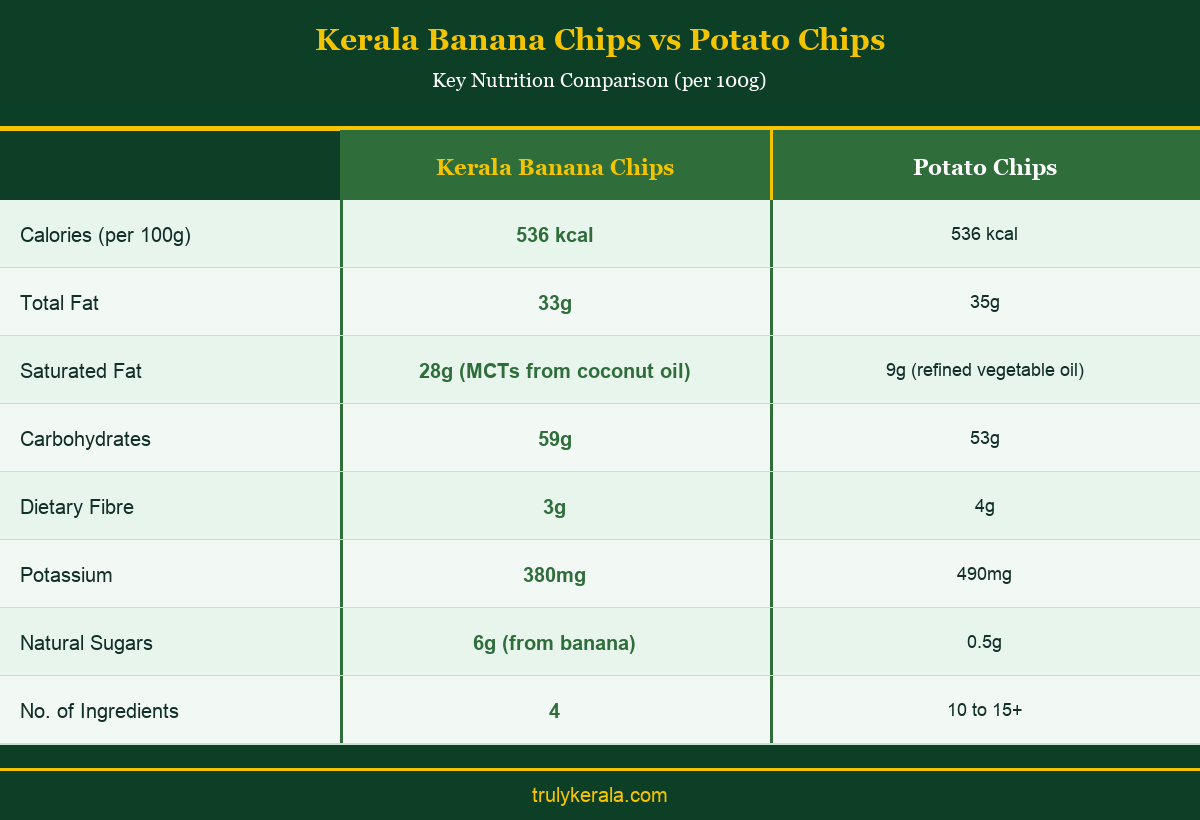
The calorie counts for banana chips and potato chips are similar at approximately 536 kilocalories per 100g. Where they diverge is in the quality of the ingredients that produced those calories. Authentic Kerala banana chips made from Nendran bananas bring natural potassium from the fruit, approximately 6 grams of natural sugars from the banana itself, and turmeric, which carries curcumin, a compound with well-documented anti-inflammatory properties. The fat comes from coconut oil rather than a generic vegetable oil blend.
Most commercial potato chips contain a longer ingredient list. Flavour enhancers, acidity regulators, and refined oil blends are common additions that extend the ingredient count well beyond what any natural recipe requires. The gap between a chip made from four ingredients and one made from twelve or more is significant for anyone focused on clean-label eating. Neither is a diet food, and both should be eaten in sensible portions. But the ingredients that make up those calories are not comparable. When you evaluate any fried snack, the full ingredient list matters as much as the calorie number.
When Banana Chips Fit into a Balanced Diet
The question of whether banana chips are healthy does not have a universal yes or no answer. They are calorie-dense, and consuming large quantities daily will have the same effect as any calorie-dense food in excess. What makes authentic Kerala banana chips a defensible snack choice is their clean ingredient profile and the nutritional contribution of the Nendran banana itself.
A reasonable portion is around 25 to 30 grams, which provides approximately 130 to 161 kilocalories. At that serving size, authentic Kerala banana chips deliver a satisfying crunch alongside potassium, natural fibre, and no hidden additives. For health-conscious snackers who want to replace ultra-processed options, a chip made from four recognisable ingredients represents a meaningful improvement over most alternatives at the same calorie count. Banana chips made from Nendran bananas and coconut oil are also naturally gluten-free, making them suitable for people with gluten sensitivity who do not want to verify a separate certified label each time they buy.
What to Look for Before You Buy
Not all banana chips sold in India are made the same way. Some carry the Kerala banana chip name while using cheaper banana varieties, refined oils, and added flavourings that the traditional recipe does not require. Knowing what to look for on the label is the fastest way to identify a genuine product from one that uses the name without the substance.
The ingredient list on authentic Kerala banana chips should contain four items: Nendran banana, coconut oil, rock salt, and turmeric. Anything beyond that is an addition the traditional recipe does not require. Warning signs include oil described as vegetable oil, palm oil, or refined oil, and vague terms like natural flavour or crispiness enhancer on the label. An FSSAI licence number on the pack confirms the product meets India's food safety and standards requirements and that the manufacturer operates under verified food safety conditions. Brands that are transparent about their ingredients and certifications are worth buying from consistently. TrulyKerala banana chips contain only four ingredients and are made from Nendran bananas fried in fresh coconut oil. Browse all available pack sizes at trulykerala.com/all-products.
Banana chips are healthy when they are made the right way. The nutrition picture improves significantly when the chips start with a quality banana variety, use fresh coconut oil, and contain no additives beyond the essential four ingredients. At a sensible serving size of 25 to 30 grams, authentic Kerala banana chips compare well against most packaged snack alternatives at the same calorie count. Buying from a brand whose ingredient list you can verify is the only reliable way to get the nutritional profile the label promises. To go deeper on what makes Kerala banana chips worth seeking out, read Kerala Banana Chips: The Complete Guide.
Frequently Asked Questions
Are banana chips healthy for weight loss?

How many calories are in Kerala banana chips?
What are the ingredients in authentic Kerala banana chips?
Are banana chips healthier than potato chips?
Do banana chips have a lot of sugar?
Are Kerala banana chips gluten-free?
What is the recommended serving size for banana chips?
Is coconut oil in banana chips healthy?
Are plain Kerala banana chips healthier than flavoured varieties?
Where can I find authentic Kerala banana chips with clean ingredients?