Kerala Banana Chips vs Potato Chips: Which Is the Healthier Snack?
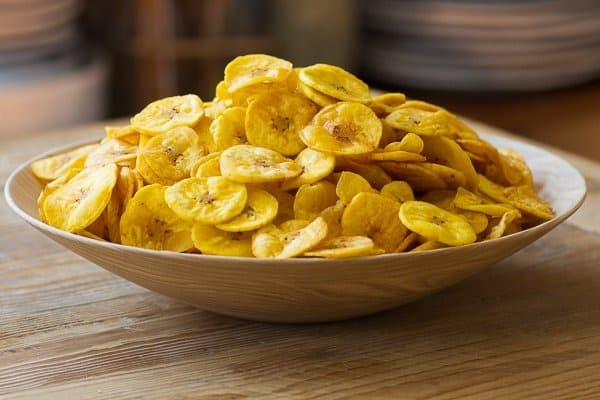
Kerala Banana Chips vs Potato Chips: Which Is the Healthier Snack?
When you compare Kerala banana chips vs potato chips, the differences go beyond taste. The ingredient list, the oil, the sodium content, and the presence of additives all tell a different story. This guide breaks down both snacks on the metrics that actually matter for health-conscious buyers.
Key Takeaways
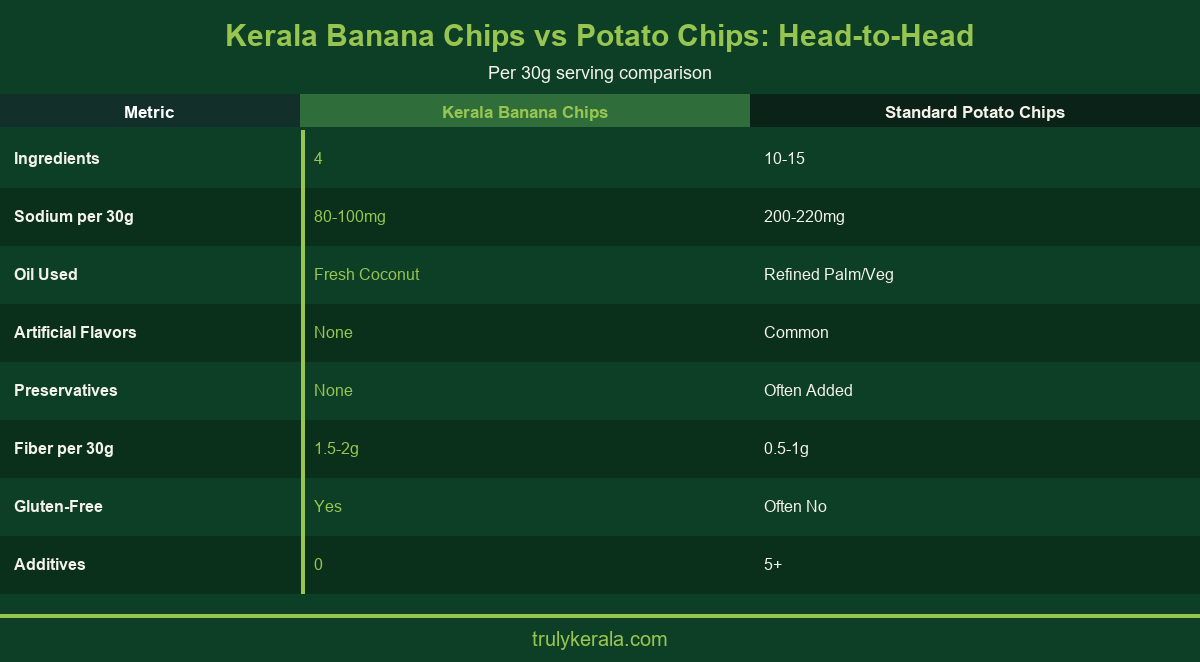
Kerala banana chips contain 4 ingredients. Standard potato chips contain 10 to 15, including artificial flavors and preservatives.
Kerala banana chips are fried in fresh coconut oil. Most potato chips use refined palm or vegetable oil.
Sodium per 30g serving: 80 to 100mg for Kerala banana chips versus 200 to 220mg for standard potato chips.
The Ingredient List: Four vs Fifteen
The clearest difference between Kerala banana chips and standard potato chips is the ingredient list. Authentic Kerala banana chips contain four items: Nendran banana, coconut oil, rock salt, and turmeric. A standard bag of popular Indian potato chips lists between 10 and 15 ingredients, which typically includes dehydrated potato flakes, refined palm oil, sugar, salt, spice mixes, flavor enhancers, citric acid, and one or more artificial colors.
Every ingredient in a food product is there for a reason. In potato chips, many of these additions exist to compensate for the use of lower-quality base ingredients, extend shelf life, or create an artificially intense flavor that keeps you eating more. In authentic Kerala banana chips, the banana does the work. Nothing else is needed.
The Oil Question: Coconut vs Refined Palm
Why the Frying Oil Matters
The oil used to fry a chip affects its taste, texture, nutrition, and how it behaves during cooking. Coconut oil, used in authentic Kerala banana chips, is primarily composed of saturated fatty acids that are stable at frying temperatures. This means the oil does not degrade or form harmful compounds during cooking. It also contributes a mild, clean aroma to the finished chip.
What Most Potato Chips Use
Standard potato chips are fried in refined vegetable oil or palm oil, which contains predominantly long-chain unsaturated fats. At high frying temperatures, these oils can oxidize and form aldehydes and other degradation products. Refined palm oil also contains higher levels of palmitic acid, a saturated fat linked to elevated LDL cholesterol at high intake levels. The nutritional profile of the frying oil carries over into the finished snack.
Nutrition Head-to-Head: What the Numbers Say
Sodium
A 30-gram serving of authentic Kerala banana chips contains approximately 80 to 100mg of sodium. The same serving of standard Indian potato chips contains 200 to 220mg of sodium, more than twice the amount. High sodium intake is a recognized risk factor for high blood pressure in individuals who are salt-sensitive. For daily snacking, the lower sodium load of Kerala banana chips represents a meaningful difference.
Fiber and Carbohydrates
Nendran banana chips retain the dietary fiber of the banana, which is approximately 1.5 to 2 grams per 30-gram serving. Standard potato chips provide 0.5 to 1 gram of fiber per serving, depending on the brand. Fiber slows digestion and contributes to satiety. A higher-fiber snack keeps you full longer with fewer servings, which matters when choosing a daily snack.
Calories
The calorie difference is modest. Kerala banana chips provide approximately 150 calories per 30g serving. Standard potato chips provide 160 to 170 calories for the same serving size. The difference is not dramatic, but the quality of those calories differs. Kerala banana chip calories come from natural banana starch and coconut oil. Potato chip calories come from potato starch, refined oil, and added sugars in flavoring blends.
Beyond Nutrition: Taste, Occasion, and Authenticity
Kerala banana chips have a flavor profile that does not depend on artificial seasoning. The Nendran banana provides a mild, starchy taste with a faint natural sweetness. The coconut oil adds subtle aroma. The rock salt balances. The result is a chip that pairs well with tea, works as a side at traditional meals, and does not leave the flavor-fatigue that heavily seasoned snacks tend to create after repeated eating.
Potato chips are engineered to maximize short-term palatability through intense flavoring. Kerala banana chips are made to taste like what they are. Both are valid snack choices, but they are not the same product. If you are choosing between the two for daily snacking, the authentic version wins on every metric that matters for long-term health. Order authentic Kerala banana chips from TrulyKerala and make the switch.
Conclusion
On every metric that matters, Kerala banana chips outperform standard potato chips. Fewer ingredients, a better oil, lower sodium, and no artificial additives. The choice is clear for anyone who snacks regularly and cares about what goes into their food. Try TrulyKerala's authentic Kerala banana chips and taste the difference yourself.
Frequently Asked Questions
Are banana chips healthier than potato chips?

Authentic Kerala banana chips are made with four ingredients, fresh coconut oil, and no artificial additives. Standard potato chips contain 10 to 15 ingredients, refined oil, and high sodium levels. On those specific metrics, Kerala banana chips are the healthier option.
Do banana chips have less fat than potato chips?
Both snacks have similar fat content by weight since both are fried products. The key difference is the type of fat. Kerala banana chips use fresh coconut oil. Potato chips typically use refined palm or vegetable oil. The source and quality of fat differs significantly.
Which has more sodium: banana chips or potato chips?
Standard potato chips contain approximately 200 to 220mg of sodium per 30g serving. Authentic Kerala banana chips contain 80 to 100mg per 30g serving. The sodium difference is significant for people monitoring their salt intake.
Can you eat Kerala banana chips instead of potato chips every day?
Yes, in moderate portions of 20 to 30 grams. Kerala banana chips are made from whole food ingredients with no artificial additives. They are a cleaner daily snacking option than most commercially available potato chips. Portion awareness still matters for calorie management.
Are Kerala banana chips gluten-free unlike potato chips?
Authentic Kerala banana chips are gluten-free: they contain no wheat or gluten-containing grains. Some potato chip brands add malt vinegar, wheat flour in seasoning blends, or manufacture on shared equipment with wheat products. Always check the label for specific brands.
Why do Kerala banana chips have fewer ingredients than potato chips?
Nendran bananas have enough natural flavor that they do not need artificial seasoning to taste good. Potato chips are made from dehydrated potato or lower-quality potato cuts that require intensive flavoring to be palatable. The base ingredient quality drives the ingredient count.
Do Kerala banana chips use palm oil?
No. Authentic Kerala banana chips use fresh coconut oil, not palm oil. Palm oil is commonly used in mass-produced potato chips and many packaged snacks due to its low cost. Coconut oil produces a cleaner flavor and is more stable at frying temperatures.
Are Kerala banana chips a good option for people with high blood pressure?
Kerala banana chips have lower sodium (80-100mg per 30g) than standard potato chips (200-220mg per 30g), making them a better snack choice for sodium-sensitive individuals. Potassium from the Nendran banana also supports blood pressure regulation. Consult a doctor for personalized dietary guidance.
How many calories do Kerala banana chips have compared to potato chips?
Kerala banana chips contain approximately 150 calories per 30g serving, while standard potato chips contain 160 to 170 calories for the same serving size. The difference is modest, but the quality of those calories differs. Banana chip calories come from natural banana starch and coconut oil, while potato chip calories come from potato starch, refined oil, and added sugars in flavoring blends.
Are Kerala banana chips vegan, unlike some potato chip brands?
Yes. Authentic Kerala banana chips are made entirely from plant-based ingredients: Nendran banana, coconut oil, rock salt, and turmeric. Some flavored potato chip varieties use dairy-derived flavor enhancers, such as cheese powder or milk solids, in their seasoning blends, which makes them unsuitable for strict vegans. Always check the ingredient label for specific brands.