Nendran Banana Chips vs Regular: The Key Differences
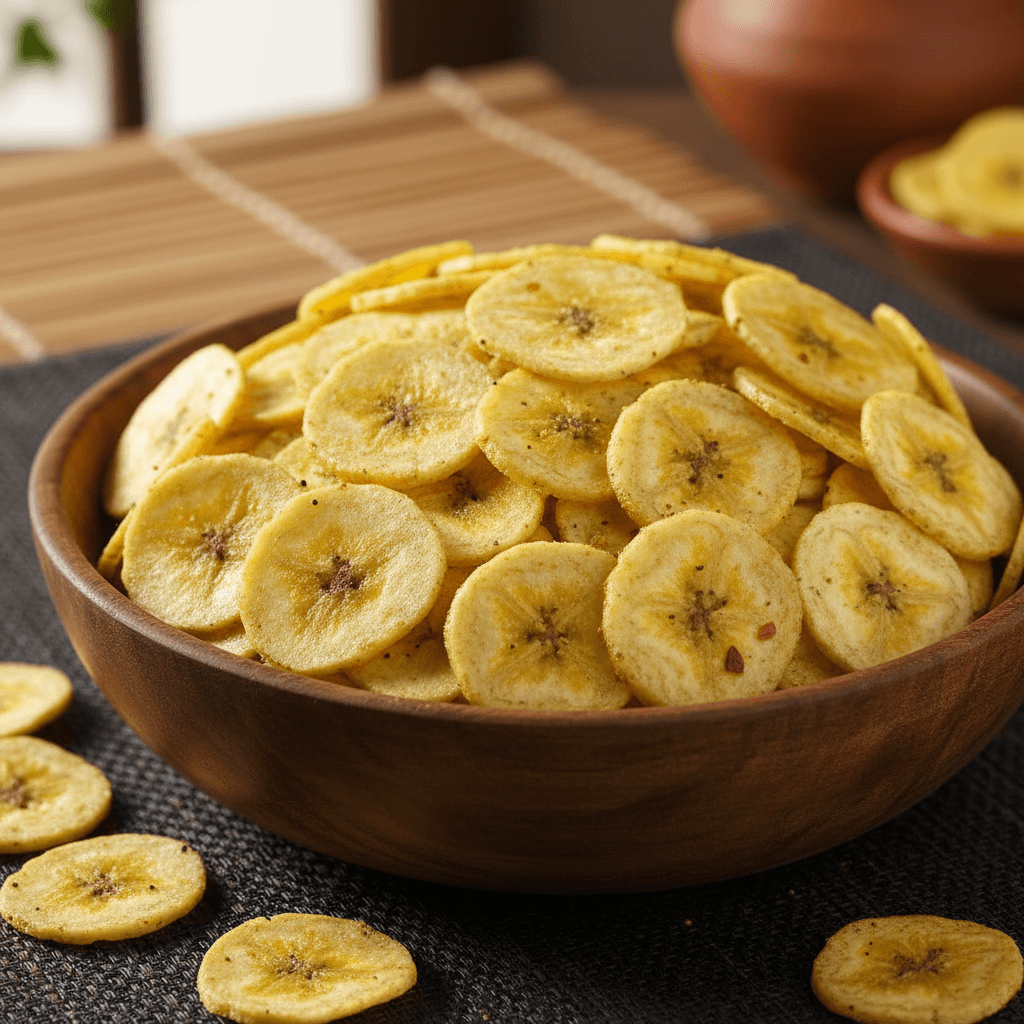
Not all banana chips are made from the same banana. Nendran banana chips, made from a Kerala-specific plantain variety, produce a distinctly different snack compared to chips made from common banana cultivars. If you have ever noticed that some banana chips stay crunchier longer, have a firmer bite, and carry a subtle natural sweetness no seasoning can manufacture, there is a reason for that. This blog explains exactly what separates Nendran banana chips from regular banana chips and why that difference matters for anyone who takes their snacking seriously.
What Is the Nendran Banana?
The Nendran banana (also spelled Nenthra in Malayalam) is a cultivar grown primarily in Kerala, Karnataka, and Tamil Nadu. It belongs to the plantain group of bananas, which are starchier and less sweet than dessert banana varieties like the Cavendish. The Nendran is large, with a thick green skin and a pale, dense flesh that is firm even when fully ripened.
In Kerala, the Nendran is not just a cooking ingredient. It is a cultural staple. Ripe Nendran is eaten as a fruit, fried as banana fritters (pazham pori), and, most famously, sliced thin and fried in coconut oil to make the crispy banana chips that Kerala is known for across India.
The variety has been cultivated in Kerala for centuries. Its high starch-to-sugar ratio makes it the preferred choice for frying, as it holds its structure at high temperatures without becoming mushy or greasy. This is why authentic Kerala banana chips are made specifically from Nendran and not from the Cavendish or any other readily available variety.
What Are Regular Banana Chips Made From?
The term regular banana chips covers a wide range of products. Most mass-market banana chips sold across India and globally are made from unripe Cavendish bananas or other commodity varieties. Some brands use dried banana slices rather than fried chips, which produces a different texture entirely. The Cavendish is widely available, easy to source at scale, and less expensive than Nendran, making it the default choice for large snack manufacturers.
The result is a thinner, lighter chip with a less complex flavour profile. Cavendish-based chips tend to absorb more oil during frying due to the lower starch density, and they can go soft faster after the pack is opened. Because the base flavour is milder and less distinctive, seasoning blends are frequently used to add character to the chip. Peri peri, chilli lime, and masala coatings are common on Cavendish-based banana chips.
This is why the banana chip category is split between two very different products that share the same name. One is a premium, single-origin product defined by its base ingredient. The other is a commodity snack defined by its seasoning.
Nendran vs Regular Banana Chips: Key Differences
The differences between Nendran banana chips and regular banana chips come down to four factors: the base ingredient, texture, flavour, and ingredient list. Nendran chips use a Kerala-specific plantain with high starch content, producing a firm, dense chip that holds its crunch longer. Regular banana chips, typically made from Cavendish, are lighter with a milder flavour that relies on seasonings for character. Authentic Nendran chips like TrulyKerala carry only four ingredients, while most regular varieties list five to twenty or more with added flavour enhancers and preservatives.
Why Nendran Chips Taste Different
The difference in taste between Nendran banana chips and regular banana chips is not subtle. The Nendran's higher starch content means the chip starts with a denser base. When fried in fresh coconut oil, the result is a chip with a complex layered flavour: the mild natural sweetness of the banana comes through first, followed by the clean richness of coconut oil, and finished with the mineral sharpness of rock salt.
This flavour profile builds as you eat. It does not demand attention the way a heavily seasoned chip does. It rewards it. This is why traditional Kerala banana chips are served with tea across Kerala households. The flavour complements rather than competes.
Regular banana chips, because they use a milder base variety and are often made with refined oils, do not carry this depth. The chip is the delivery mechanism for whatever seasoning is applied. This is why plain banana chips made from Nendran can stand entirely on their own, while most regular banana chips are marketed by their flavour variant rather than the banana itself.
TrulyKerala and the Nendran Standard
TrulyKerala banana chips are made exclusively from Nendran banana sourced from Kerala. The ingredient list has four items: Nendran Banana, Coconut Oil, Rock Salt, and Turmeric. That is the complete list. No flavour enhancers, no preservatives, no artificial colours, no recycled oils. FSSAI licence number 11323007002083 confirms the product meets national food safety standards.
The use of fresh coconut oil is a deliberate choice. Coconut oil has a higher smoke point than many refined vegetable oils and contributes a clean flavour profile that complements the Nendran's natural taste. TrulyKerala does not reuse oil across fry batches, which prevents the off-flavours that accumulate in degraded oil and are commonly masked by seasoning in lower-quality products.
The canister packaging preserves the chip's crunch after opening, which matters more for a starch-dense chip than for a lighter variant. The 125g canister is designed for desk snacking, travel, and gifting. The 500g and 1kg packs serve households and bulk buyers. All sizes are available at trulykerala.com with delivery across India.
Conclusion
The difference between nendran banana chips and regular banana chips starts with the banana itself. A higher starch content, a Kerala-specific cultivar, and a traditional frying process using fresh coconut oil produce a chip that no commodity snack can replicate. If you have only tried regular banana chips and wonder what the Kerala version actually tastes like, the answer starts with a Nendran banana and four honest ingredients. Try TrulyKerala's range at trulykerala.com and taste what makes the difference real.
Frequently Asked Questions
What is the difference between Nendran banana chips and regular banana chips?

Nendran banana chips use a Kerala-specific plantain with high starch content, fried in fresh coconut oil. Regular banana chips use Cavendish varieties, refined oils, and added seasonings. The base ingredient determines the taste, texture, and ingredient count from the ground up.
What are Nendran banana chips made from?
Authentic Nendran banana chips contain four ingredients: Nendran banana, fresh coconut oil, rock salt, and turmeric. No preservatives, flavour enhancers, or artificial additives are used in the traditional recipe. The Nendran banana is a starchy plantain cultivar native to Kerala, Karnataka, and Tamil Nadu.
Why do Nendran banana chips stay crunchier longer than regular banana chips?
Nendran bananas have a higher starch-to-sugar ratio than Cavendish varieties. This density holds structure at frying temperatures and resists moisture absorption after the pack is opened, keeping the chip firm longer than chips made from lighter, lower-starch banana cultivars.
Are Nendran banana chips healthier than regular banana chips?
Nendran banana chips made with four clean ingredients and fresh coconut oil carry no artificial additives or flavour enhancers. Compared to regular chips using refined oils and extended ingredient lists, they offer a cleaner nutritional profile.
What banana variety is used in authentic Kerala banana chips?
Authentic Kerala banana chips are made from the Nendran banana, a starchy plantain grown primarily in Kerala. It differs from the Cavendish banana used in mainstream chip production due to its firmer flesh, higher starch content, and distinctly more complex natural flavour profile when fried.
Why are Nendran banana chips fried in coconut oil?
Coconut oil has a higher smoke point than most refined vegetable oils and contributes a clean flavour that complements the Nendran banana's natural taste. It prevents the greasy finish associated with refined oils and produces fewer oxidation byproducts during the frying process.
How many ingredients are in authentic Kerala banana chips?
Authentic Kerala banana chips contain only four ingredients: Nendran banana, fresh coconut oil, rock salt, and turmeric. Any product with additional flavour agents, crispiness enhancers, or unspecified oil types is not made using the traditional recipe.
Can you taste the difference between Nendran and Cavendish banana chips?
Yes. Nendran chips carry layered flavour: mild natural sweetness from the banana, clean richness from coconut oil, and a mineral finish from rock salt.Cavendish-based chips have a milder base and rely almost entirely on added seasonings to provide flavour character.
What makes Nendran banana better for chips than Cavendish banana?
The Nendran's high starch content holds its structure at frying temperatures without becoming mushy or greasy. Cavendish bananas have lower starch density, absorb more oil during frying, and produce a lighter chip with significantly less natural flavour complexity than Nendran-based chips.
Do Nendran banana chips need seasoning to taste good?
No. The Nendran variety and fresh coconut oil together produce a layered flavour that stands on its own without added seasonings. Most Cavendish-based chips require flavour coatings because the base ingredient is mild. Nendran chips are marketed by the banana itself, not the seasoning.