How Kerala Banana Chips Are Made: The Traditional 4-Ingredient Process
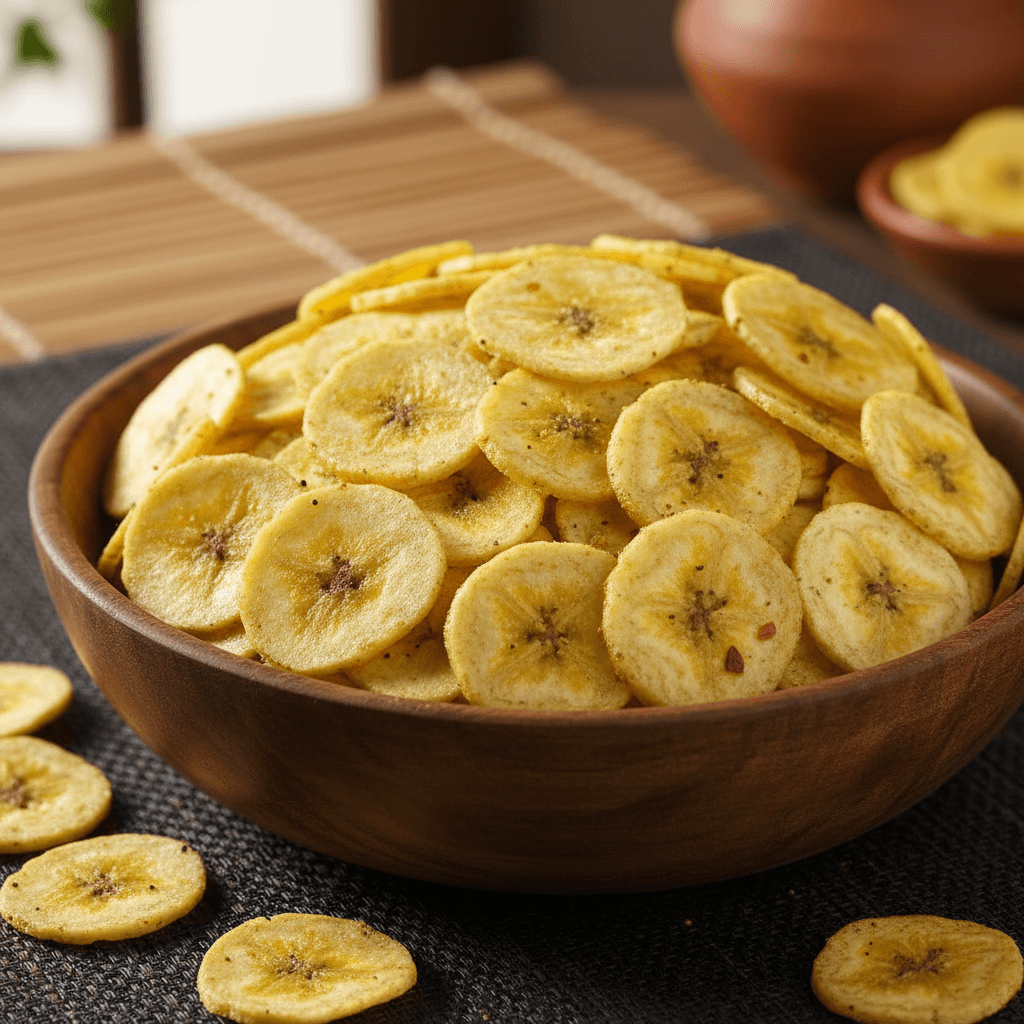
The process behind authentic Kerala banana chips is simpler than most people expect. Four ingredients. A specific banana variety. Fresh coconut oil that is never reused. And a seasoning technique that has remained the same for generations. Understanding how Kerala banana chips are made explains why the authentic version tastes so different from mass-produced alternatives.
Key Takeaways
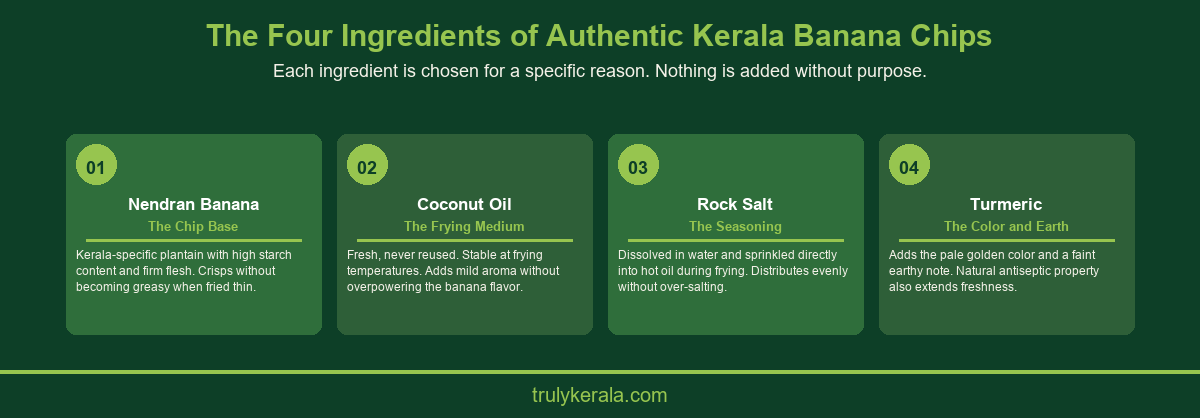
Authentic Kerala banana chips use only four ingredients: Nendran banana, coconut oil, rock salt, and turmeric.
The Nendran banana variety is essential. Regular bananas absorb oil and go soft. Nendran crisps without becoming greasy.
TrulyKerala fries every batch in fresh coconut oil and never reuses it, ensuring consistent flavor and quality.
Why the Process Matters More Than You Think
Most packaged snacks are made through industrial processes that use refined oils, artificial flavors, and preservatives to standardize taste and extend shelf life. The process for authentic Kerala banana chips works in the opposite direction. The ingredients are simple, the steps are deliberate, and nothing artificial enters the production at any stage. The result is a chip whose quality depends entirely on the quality of each input, which is why the sourcing and method both matter.
When a brand cuts corners on any step, the difference shows in the chip. Reused oil produces a stale taste. The wrong banana variety produces a greasy or soft texture. Inconsistent slicing produces uneven frying. Every detail in the traditional process exists for a reason.
The Four Ingredients and Why Each Is Essential
Nendran Banana: The Only Acceptable Base
The Nendran banana is a plantain variety grown specifically in Kerala. It has a higher starch content, lower moisture, and firmer cell walls than common Cavendish bananas. When sliced thin and dropped into hot oil, the surface crisps immediately without absorbing oil. The result is a chip that is crispy without being greasy. Using a different banana variety produces inferior results. Read the full breakdown in our guide on Nendran banana chips vs regular banana chips.
Fresh Coconut Oil: The Frying Medium That Cannot Be Substituted
Coconut oil is the only frying medium used in authentic Kerala banana chips. It is stable at high temperatures, which means it does not break down into harmful compounds during frying. It also contributes a mild, clean aroma that complements rather than overpowers the Nendran banana flavor. TrulyKerala uses fresh coconut oil for every batch and never reuses it. Reused oil degrades chemically with repeated heating, producing off-flavors and increasing free fatty acid content. For a deeper look at why this matters, read why coconut oil makes Kerala banana chips healthier.
Rock Salt and Turmeric: Simple Seasoning with Purpose
Rock salt is dissolved in water and sprinkled directly into the hot frying oil, not onto the chips afterward. This technique distributes salt evenly across every chip during the frying process, rather than coating the exterior surface. Turmeric is added at the same stage. It gives the chips their pale golden color and a faint earthiness that distinguishes authentic Kerala banana chips from plain fried banana slices. Neither ingredient is excessive. Neither is there for appearance alone.
The Step-by-Step Production Process
Step 1: Banana Selection and Ripeness Assessment
Raw Nendran bananas are selected when they are firm and fully green. The selection window is narrow: too ripe and the banana becomes sweet and soft, producing inconsistent chips; too underripe and the banana is hard to slice uniformly. TrulyKerala sources bananas through a farm-direct supply chain that ensures consistent ripeness at the time of production.
Step 2: Peeling and Uniform Slicing
Peeled bananas are sliced on a mandoline-type slicer to produce rounds of consistent thickness. Uniformity at this stage is critical. Chips that are thicker in the center will remain chewy after frying while the edges burn. Chips sliced too thin will crisp too fast and develop a bitter flavor. The target is a wafer-thin, even round that fries uniformly from edge to center.
Step 3: Frying in Fresh Coconut Oil
Sliced banana rounds are dropped into coconut oil heated to 160 to 180 degrees Celsius. The oil temperature is monitored throughout the frying process. Too low and the chips absorb oil rather than crisping. Too high and the outside burns before the center cooks through. Rock salt solution and turmeric are added directly into the oil during frying, ensuring even seasoning without post-production coating.
Step 4: Draining, Cooling, and Immediate Sealing
Once the chips reach a pale golden color, they are removed from the oil, drained, and cooled on a rack. Sealing happens immediately after cooling, before any moisture can enter the product. Airtight canisters preserve crispness without the use of preservatives. The chip's shelf life comes from physical protection, not chemical additives.
What Separates TrulyKerala From Industrial Production
Industrial banana chip production typically uses continuous fryers with recycled oil, pre-mixed seasoning blends that include artificial flavors, and flexible packaging that allows moisture ingress over time. TrulyKerala operates on a batch production model where each lot is fried in fresh oil, seasoned traditionally, and sealed in rigid canisters immediately after cooling.
The result is a chip that tastes like it was made in a home kitchen, because the process is not far removed from one. Order authentic Kerala banana chips from TrulyKerala and taste the difference that process makes.
Conclusion
Authentic Kerala banana chips are the product of a process that refuses to take shortcuts. Four ingredients, selected with care, prepared in a specific sequence, and sealed immediately to preserve quality. Every batch of TrulyKerala banana chips follows this same process. Buy fresh-made Kerala banana chips direct from Kochi and experience what the traditional method produces.
Frequently Asked Questions
What type of banana is used to make Kerala banana chips?

Authentic Kerala banana chips use the Nendran banana, a plantain variety native to Kerala. It has higher starch content and lower moisture than common bananas, which produces a crispier chip without oil absorption. No other variety produces the same result.
Why is the oil used in banana chips important?
The type and quality of frying oil directly affects taste, texture, and nutrition. Authentic Kerala banana chips use fresh coconut oil, which is stable at frying temperatures and contributes a clean flavor. Reused or refined oils produce off-flavors and lower nutritional quality.
Read more: why coconut oil makes Kerala banana chips healthier
Can Kerala banana chips be made at home?
Yes, but consistent quality is difficult to achieve without a mandoline slicer and fresh coconut oil. Home batches often have uneven thickness and inconsistent salt distribution. The commercial process uses controlled temperature and slicing equipment that home kitchens typically lack.
How are Kerala banana chips seasoned?
Salt and turmeric are added directly into the hot frying oil during production, not sprinkled on after. This technique distributes seasoning evenly across every chip. It is a traditional method specific to Kerala chip-making that differs from most commercial snack seasoning approaches.
What makes TrulyKerala banana chips different from other brands?
TrulyKerala uses fresh coconut oil for every batch and never reuses it, sources Nendran bananas through a farm-direct supply chain, and seals chips immediately after cooling without adding preservatives. The production follows the traditional Kerala method with no industrial shortcuts.
How long does the production process take?
From banana selection to sealed packaging, a single batch takes approximately four to six hours. Most of this time is quality preparation and controlled frying. The immediate post-fry sealing adds time but is essential for preserving crispness without chemical preservatives.
Are there any additives in the production process?
No. TrulyKerala banana chips contain only Nendran banana, coconut oil, rock salt, and turmeric. No artificial flavors, preservatives, colors, flavor enhancers, or anti-caking agents are used at any stage of production. The FSSAI license confirms compliance with India's food safety standards.
Why do authentic Kerala banana chips vary slightly in color and shape?
Natural variation in the Nendran banana, slight differences in frying temperature, and hand-seasoned production result in minor visual differences between chips. This is a marker of authentic production, not inconsistency. Industrial processes use artificial colors and uniform stamping to create visual consistency.
What is the shelf life of TrulyKerala banana chips?
Authentic Kerala banana chips made through the traditional process and sealed immediately in airtight canisters have a shelf life of up to six months. Once opened, the canister should be resealed and the chips consumed within two to three weeks for best crispness. No refrigeration is required. TrulyKerala achieves this shelf life through hygienic production and immediate airtight sealing after cooling not through preservatives or artificial stabilizers.
Where can I buy authentic Kerala banana chips online?
TrulyKerala banana chips are available for direct purchase at trulykerala.com, as well as on Amazon and Flipkart. Ordering directly from the website ensures you receive the freshest batch dispatched from Kochi. Bulk orders and B2B inquiries for retail or gifting partnerships are also available through the website.