Kerala Banana Chips and Diabetes: A Glycemic Index Guide
Managing blood sugar does not mean giving up every snack you enjoy. For people with diabetes, the question is not simply "Can I eat this?" but "How will this affect my blood sugar?"
Kerala banana chips made from raw Nendran bananas are a traditional South Indian snack. While many diabetics avoid them, understanding their glycemic index (GI), ingredients, and portion size provides a much clearer picture.
Key Takeaways
Kerala banana chips made from raw Nendran bananas have an estimated medium glycemic index (GI) of 55–65.
Made with only four ingredients—Nendran banana, coconut oil, rock salt, and turmeric—they contain no added sugar or preservatives.
A serving of 25–30g (about 15–18 chips) can fit into a balanced diabetic meal plan when paired with protein or fibre.
What Is the Glycemic Index (GI)?
The Glycemic Index (GI) measures how quickly carbohydrate-containing foods raise blood sugar levels. Foods are classified as:
Low GI: Below 55
Medium GI: 56–69
High GI: 70 and above
According to the University of Sydney Glycemic Index Database, choosing low- to medium-GI foods can help people with diabetes better manage blood glucose levels.
However, GI is only one part of the picture. Portion size, glycemic load (GL), and the foods eaten alongside the snack also influence blood sugar response.
What Is the Glycemic Index of Kerala Banana Chips?
The GI of banana chips depends on two important factors:
The ripeness of the banana.
The cooking method.
Raw green bananas contain more resistant starch than ripe bananas, resulting in a lower glycemic response. Kerala banana chips are traditionally made using raw Nendran bananas, which naturally contain more resistant starch than many other banana varieties.
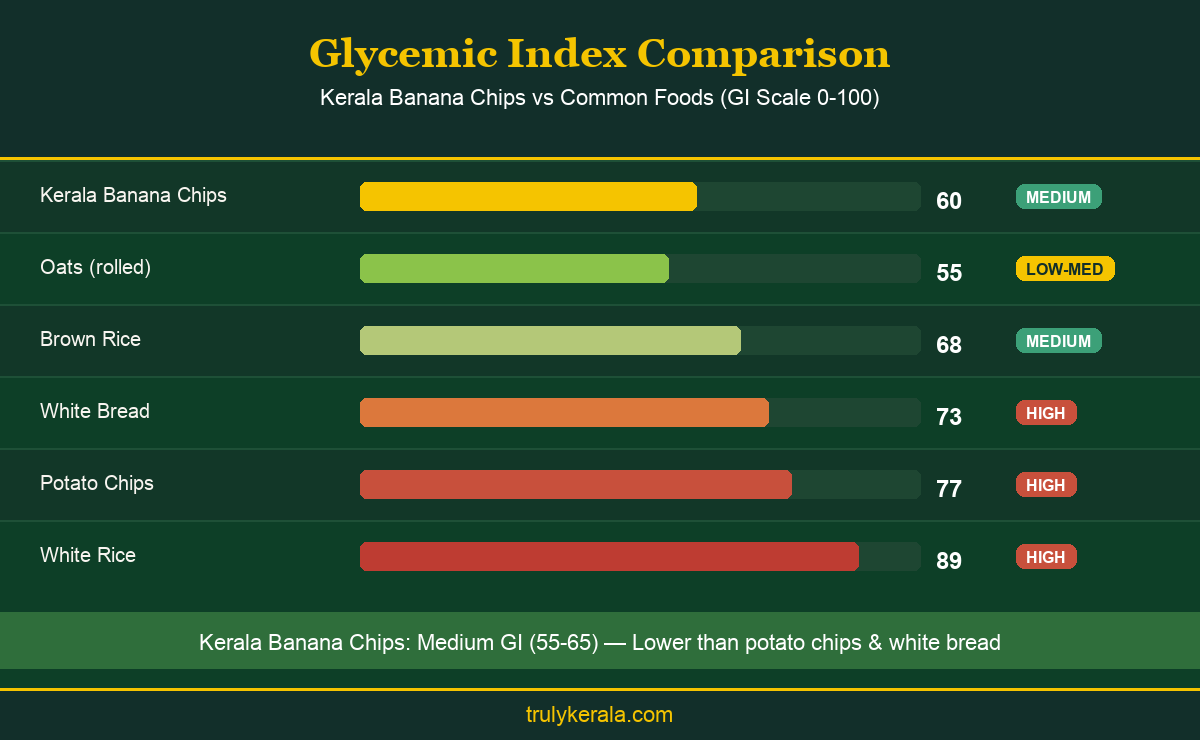
Although frying converts some resistant starch into digestible starch, Kerala banana chips still have an estimated GI of 55–65, placing them in the medium-GI category.
For comparison:
Oats – GI 55
Kerala banana chips – GI 55–65
White bread – GI 73
Potato chips – GI 75–80
Since TrulyKerala banana chips contain only four natural ingredients, they avoid the added sugars, starches, and artificial flavourings commonly found in many packaged snacks.
Does Coconut Oil Help?
The type of oil used during frying can influence the nutritional quality of a snack.
TrulyKerala banana chips are fried in fresh coconut oil. Unlike many commercial snacks prepared using refined vegetable oils, coconut oil contains medium-chain triglycerides (MCTs), which are metabolised differently by the body.
Although coconut oil does not reduce the glycemic index itself, the fat content slows gastric emptying, helping carbohydrates enter the bloodstream more gradually.
Learn more in our guide: Why Coconut Oil Makes Kerala Banana Chips Healthier.
How Many Banana Chips Can Diabetics Eat?
For people with diabetes, portion control is more important than GI alone.
Nutritional Value
Nutrient | Per 100g | Per 25g Serving |
|---|---|---|
Calories | 520–540 kcal | 130–140 kcal |
Carbohydrates | 58–62g | 14–16g |
Fat | 30–34g | 7–8g |
Protein | 2–3g | 0.5–0.8g |
Dietary Fibre | 3–4g | 0.8–1g |
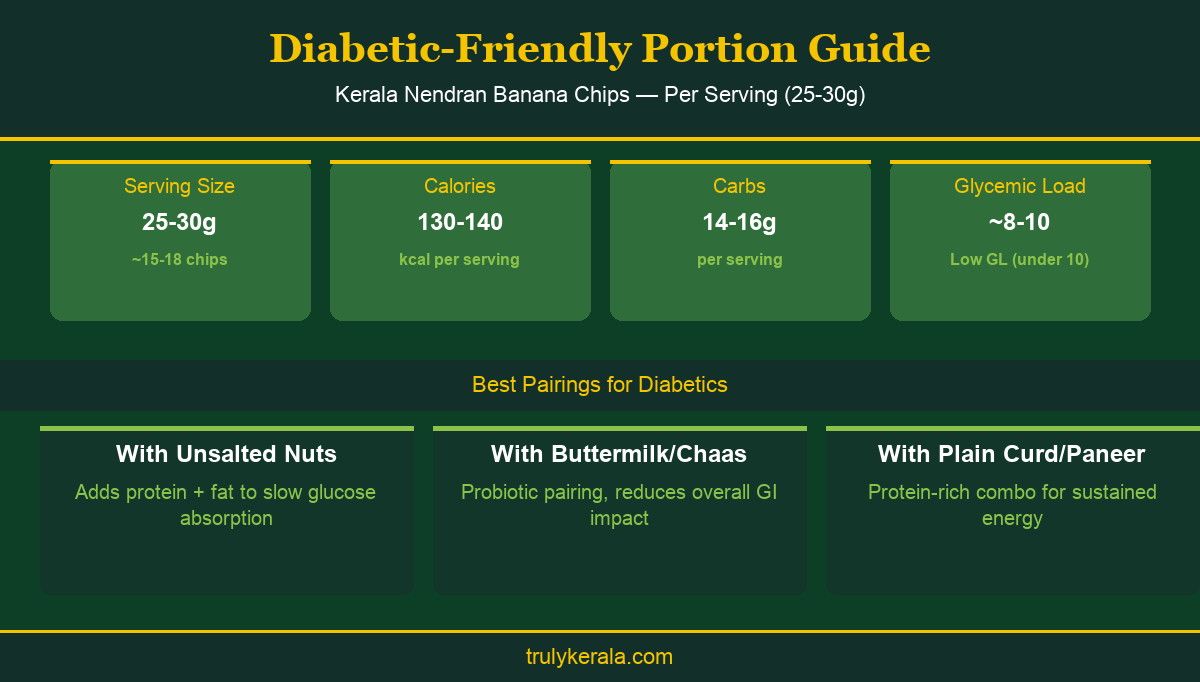
A serving of 25–30g (approximately 15–18 chips) provides a glycemic load of around 8–10, which is considered low.
For better blood sugar management, pair banana chips with:
Unsalted nuts
Plain curd or Greek yogurt
Paneer
Buttermilk (chaas)
Avoid eating banana chips on an empty stomach. They are best enjoyed as part of a balanced snack or meal.
Are Kerala Banana Chips Good for Diabetics?
Kerala banana chips made from raw Nendran bananas differ significantly from heavily processed, flavoured chips found in supermarkets. Their simple ingredient list, absence of added sugar, and moderate glycemic index make them a better snack option when enjoyed in moderation.
For a detailed nutritional breakdown, read our guide on Banana Chips Nutrition Facts Explained.
People with diabetes should still practise portion control and consult their healthcare provider or dietitian for personalised dietary advice.
Final Thoughts
Kerala banana chips have an estimated glycemic index of 55–65, placing them in the medium-GI category. Made from raw Nendran bananas and fried in pure coconut oil without added sugars or preservatives, they can be enjoyed in moderation as part of a balanced diet.
If you're looking for authentic Kerala banana chips made using traditional methods and natural ingredients, explore TrulyKerala's Banana Chips Collection.
Frequently Asked Questions
Are banana chips safe for diabetics?

Banana chips made from raw Nendran bananas have a medium glycemic index of approximately 55 to 65. When eaten in a controlled 25-gram portion, they fit within most diabetic meal plans. Pairing with protein slows blood sugar absorption further.
What is the glycemic index of banana chips?
The GI of Kerala-style banana chips made from raw Nendran bananas falls between 55 and 65. This is lower than potato chips (GI 75 to 80) and comparable to oats (GI 55). The exact GI depends on banana ripeness and the cooking oil used. To learn more about choosing authentic Kerala banana chips, read our guide on how to buy Kerala banana chips online.
How many banana chips can a diabetic eat per day?
A diabetic can typically include 25 to 30 grams (approximately 15 to 18 chips) as a snack serving. This provides around 14 to 16 grams of carbohydrates and a glycemic load of approximately 8 to 10. Individual tolerance may vary.
Do banana chips raise blood sugar?
Yes, banana chips contain carbohydrates that will raise blood sugar. However, when made from raw unripe bananas with coconut oil and no added sugars, the rise is gradual and moderate. Portion control and pairing with protein minimises the spike.
Is Nendran banana good for diabetics?
Nendran bananas harvested raw are higher in resistant starch than most banana varieties. Resistant starch is not fully digested and does not raise blood glucose in the same way as simple sugars, making raw Nendran a better choice for diabetics.
What makes Kerala banana chips different from regular chips?
Kerala banana chips use the Nendran variety (higher resistant starch), are fried in coconut oil (no trans fats), and contain only four ingredients. Regular packaged chips often use refined oils, added sugars, and artificial flavours that elevate the glycemic response.
What is glycemic load and why is it important for diabetics?
Glycemic load combines the GI with actual serving size to measure the total blood sugar impact. A GL under 10 is considered low and is more relevant than GI alone. A 25-gram portion of Kerala banana chips has a glycemic load of approximately 8 to 10.
Are TrulyKerala banana chips sugar-free?
TrulyKerala banana chips contain no added sugars. The four ingredients are Nendran banana, coconut oil, rock salt, and turmeric. The natural sugars present in the banana itself are the only source of carbohydrates, unlike flavoured chips that often contain added sugars.
What is the best time for diabetics to eat banana chips?
The best time is as part of a balanced snack rather than on an empty stomach. Before or after a meal that includes protein and fibre is ideal, as both nutrients slow glucose absorption and reduce blood sugar spikes from carbohydrate-containing foods.
Can a diabetic eat chips made from coconut oil daily?
Coconut oil is a healthier frying medium than refined oils for diabetics. A small daily portion of Kerala banana chips fried in coconut oil can fit into a diabetic diet if total carbohydrate intake is managed across the day. Always monitor individual blood glucose response.