Cardamom Baking Recipes: Modern Kerala Culinary Innovation

Search for cardamom baking recipes online and most results point to the same handful of traditional Indian sweets. That leaves a wide culinary world almost untouched: buttery cardamom shortbread, Scandinavian spiced buns, cold brew laced with whole elaichi, and banana chips reinvented as a salad crunch or a cheese board companion. This guide takes TrulyKerala's farm sourced whole green cardamom and banana chips into that modern territory, well away from the sadya table and the festival sweet box. The seven guides linked below cover baking, drinks, global cuisine, hosting, technique, and fusion snacking, built for cooks and small food businesses who want fresh ideas rather than the same recipe list everyone else already has.
Key Takeaways
- Whole green cardamom and banana chips work well far beyond classic Kerala dishes, in modern baking, drinks, salad and board toppings, and global recipes from Scandinavia to the Middle East.
- Each section below summarizes one full guide, covering baking, coffee and mocktails, salads and boards, world cuisine, hosting a platter, spice basics, and fusion snack mixes, so you can jump straight to what you need.
- Readers who want traditional Kerala recipes instead, such as sadya dishes or festival sweets, can jump to TrulyKerala's existing recipe library, linked in the section below.
From Kitchen Staple to Global Ingredient
TrulyKerala already publishes a full library of traditional Kerala recipes built around banana chips and cardamom, including guides such as 7 brilliant snack recipes and two deep dives into traditional recipes using green cardamom and whole green cardamom in classic dishes. If that is what brought you here, those posts are the better starting point.
This page takes a different route. Instead of sadya staples and festival sweets, it looks at where cardamom and banana chips show up in modern, international kitchens: bakeries, coffee bars, salad counters, and party platters far from Kerala. The ingredients have not changed. TrulyKerala still hand picks whole green cardamom pods from Munnar farms and fries banana chips the traditional way in coconut oil. What has changed is how home cooks and chefs are using them, and this pillar page is built to track that shift, cluster by cluster.
That farm to table sourcing matters more once you start baking, brewing, or mixing with these ingredients rather than simply serving them as a snack. A pod that has sat in a warehouse for a year behaves very differently in a cookie dough or a cold brew than one picked and dried within the last season. TrulyKerala buys directly from growers in the Idukki hills specifically so that home cooks working through modern recipes get a consistent, aromatic pod every time, whether they are testing a Scandinavian bun recipe for the first time or building a party platter for a dozen guests.
Each section below is a short summary of a full length guide. Click through for step by step detail, ratios, and technique notes. Together they form a complete map of modern cardamom and banana chips use, from a Sunday baking project to a weeknight snack bowl. None of it requires special equipment or hard to find ingredients, just a slightly different way of thinking about two pantry staples most readers already associate with one narrow use case.
This is also useful reading for small food businesses, not only home cooks. Cafes experimenting with a seasonal cardamom latte, bakeries testing a spiced cookie line, or event caterers building a modern snack platter can all use these same guides as a starting brief before developing a menu item of their own.
One more distinction worth making early: this page and the seven guides linked from it are about culinary use, not health claims. Readers researching the wellness side of cardamom and banana chips will find that covered separately across TrulyKerala's blog, while this pillar stays focused on flavor, technique, and presentation.
Baking with Cardamom: Cookies, Cakes and Global Desserts
Cardamom belongs in far more than chai. Ground into shortbread dough, folded into cake batter, or dusted into a spice blend for cookies, it adds a citrusy, slightly minty warmth that pairs naturally with butter, brown sugar, and vanilla. Home bakers experimenting with modern cardamom recipes usually start with one simple swap: replacing part of the cinnamon or nutmeg in a favorite recipe with freshly crushed cardamom seeds. Professional resources such as King Arthur Baking's spice guides are a useful reference for ratios if you are adapting a recipe that was not originally written with cardamom in mind. Shortbread, brown butter cookies, and spiced pound cake all take well to a first attempt because the fat content in the recipe carries the spice's aroma through baking without letting it turn bitter.
Global desserts are just as approachable. A basic vanilla cake batter, a simple sugar cookie, or even a batch of pancakes all accept a small amount of ground cardamom without needing any other change to the recipe, which makes this one of the lowest risk ways to try the spice for the first time. Most cardamom baking recipes worth repeating start this simply, with one familiar base recipe and one new spice.
Whole Pods vs Ground Cardamom in Baking
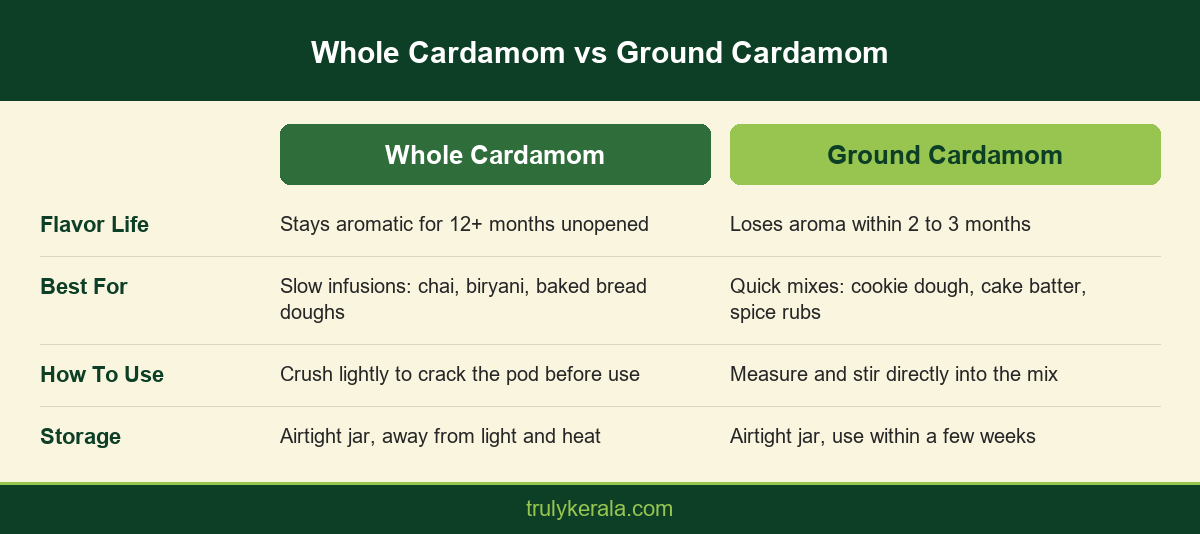
Whole pods hold their aroma for months, which matters if you bake in small batches. Crack the pod, remove the seeds, and grind just before use for the strongest flavor. Cardamom bought already ground is convenient for a single recipe but fades within weeks, so buy it in small quantities if a recipe calls for the powder directly.
A quick test before committing a whole batch of dough or batter: crush one seed between your fingers and smell it. A fresh pod smells sharp and almost eucalyptus like. If the aroma is faint, the pod is old and you will need more of it, or a fresher batch, to get the same effect a recipe writer intended.
Pairing Cardamom with Butter, Citrus and Nuts
Cardamom's floral heat plays well with browned butter, orange or lemon zest, and toasted almonds or pistachios. A simple rule for new bakers: start with a quarter teaspoon of ground cardamom per cup of flour, then adjust to taste once you know how strong your batch of pods is. The full guide walks through cookie, cake, and global dessert recipes step by step.
Cardamom also tolerates being paired with a second warm spice, most often cinnamon or ginger, without the flavors competing. That makes it a natural fit for autumn and winter baking, where a single spiced cookie or loaf cake often needs more than one note to feel finished.
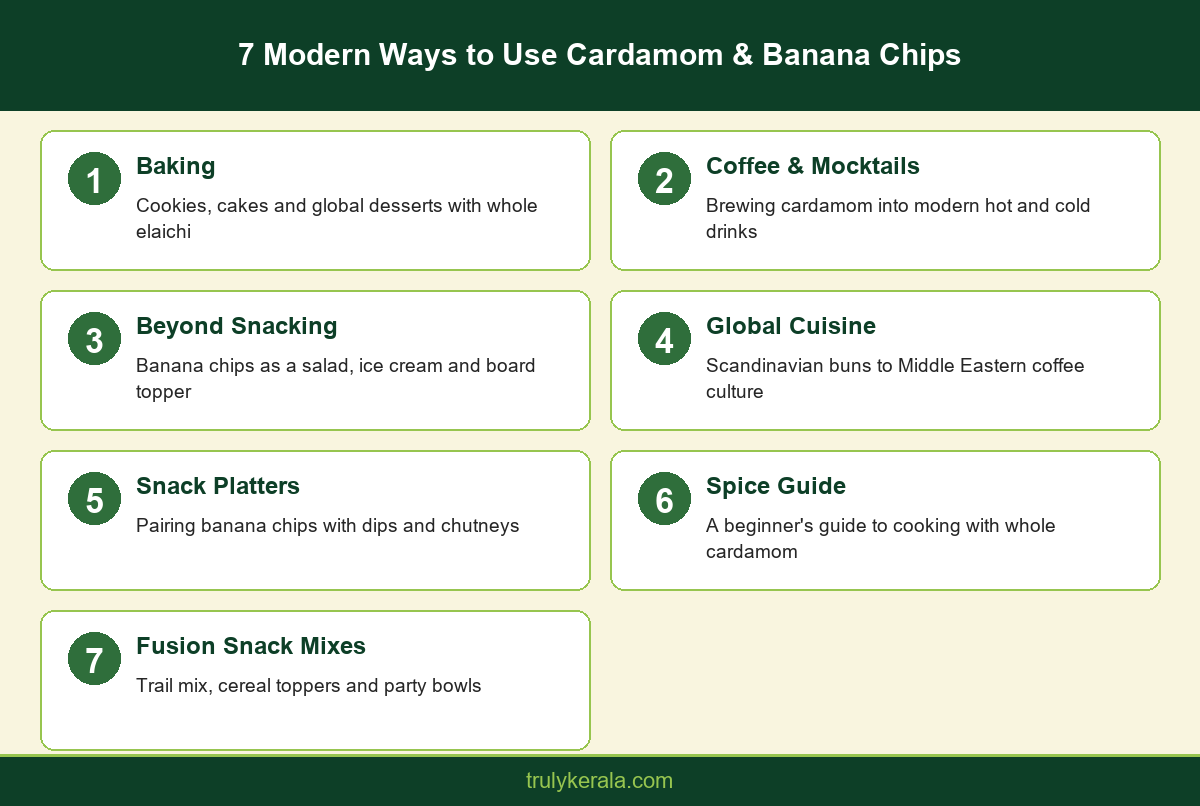
Cardamom Coffee and Mocktails: Modern Drink Innovation
Cardamom has flavored coffee across the Middle East for centuries, and that same warmth translates well into modern cafe drinks. A crushed pod steeped in cold brew, a pinch of ground cardamom whisked into a latte, or a spiced simple syrup shaken into a alcohol free mocktail all deliver the same aromatic lift without needing any special equipment.
The full guide to brewing cardamom into modern drinks covers brew times, syrup ratios, and pairing notes for both hot and iced drinks, so a home bartender or a coffee enthusiast can start experimenting the same afternoon they read it.
A cardamom simple syrup is the easiest entry point for anyone new to flavoring drinks at home. Simmer crushed pods with equal parts sugar and water for a few minutes, strain, and store the syrup in the refrigerator. From there it can sweeten iced tea, a mocktail, or a plain sparkling water without any further prep on a busy morning.
Cold brew responds particularly well to this treatment because the long steep time gives the pods more contact time than a quick hot brew would. Add two or three cracked pods to the grounds before steeping overnight, and strain everything together the next morning.
Banana Chips Beyond Snacking: Salads, Ice Cream and Boards
Crushed banana chips make an excellent stand in for croutons, adding crunch and a faint sweetness to a green salad without the extra oil of a fried topping made fresh at home. The same crunch works on a scoop of vanilla or coconut ice cream, and whole or halved chips slot neatly onto a charcuterie board next to nuts and dried fruit. For readers tracking macros, USDA nutrition data on plantain and banana products is a good reference point before building a menu around them.
The appeal here is texture rather than flavor alone. Most crunchy salad toppers, whether croutons or fried onions, are made fresh and go soft within minutes once they meet a dressing. Banana chips are fried and sealed well before they reach a kitchen, so they hold their crunch noticeably longer once added to a bowl.
This also makes them useful for meal prep. A jar of crushed chips kept on the counter can top several days of salads or grain bowls without losing crunch, which is not something you can say about most homemade crispy toppings.
It also means a single bag serves more than one purpose in a kitchen. The same batch that goes into a snack bowl one evening can finish a salad or a dessert the next day, which is a useful thing to know if you are trying to reduce food waste in a small household.
A Crunchy Salad and Dessert Topper
A tablespoon of crushed banana chips over a salad or dessert bowl adds texture in seconds, no cooking required. It works especially well with tropical flavors: mango, coconut, or citrus.
For a dessert application, try scattering coarsely crushed chips over a bowl of vanilla ice cream right before serving, along with a drizzle of honey or chocolate sauce. The salt already on the chips balances the sweetness of both toppings.
A Grazing Board Addition
On a snack or cheese board, banana chips bring a naturally sweet, crisp element that balances salty cured meats and rich cheese. The full guide to creative ways to top salads, ice cream and boards has specific pairing ideas for salads, desserts, and boards.
Group the chips in a small bowl or a cleared corner of the board rather than scattering them loosely among wetter items like fruit or dip, so they stay crisp until a guest actually reaches for them.
Cardamom in Global Cuisine: A World Tour
Long before it reached Kerala's export ports, cardamom traveled trade routes into Scandinavian bakeries and Middle Eastern coffee houses, and both traditions are still very much alive today. Nordic bakers fold it into sweet yeasted buns, while cardamom laced coffee remains a hospitality ritual across the Gulf region. Neither tradition uses cardamom as a background note. In both cases it is meant to be noticed, which is part of why home cooks outside those regions are often surprised by how much of the spice a genuine recipe actually calls for.
Other regions borrow the spice more quietly. German and Austrian Christmas baking sometimes includes a pinch of cardamom alongside cinnamon and cloves, and a version of spiced coffee shows up in parts of Central Asia as well, usually adapted from the same Gulf tradition.
What ties these traditions together is a preference for whole pods over ground powder, largely for the same freshness reasons covered in the spice guide below. A cook in Stockholm and a cook in Dubai are, in that narrow sense, making the same choice a Kerala grower would recognize immediately.
Scandinavian Baking Traditions
Sweden's cardamom bun tradition uses generously spiced, buttery dough rolled with a cardamom sugar filling, a technique that translates directly to any home oven.
The buns are typically twisted or knotted before proofing, but the flavor comes through even in a simpler shape, which makes this a forgiving recipe for a first attempt at yeasted, spiced baking.
Middle Eastern Coffee Culture
In Gulf hospitality, cardamom pods are simmered directly with the coffee grounds rather than added afterward, producing a distinct, fragrant brew served in small cups as a welcome ritual. The full guide to cardamom's global culinary journey covers both traditions and a few more in detail.
A lighter roast is traditional for this style of coffee, since a darker roast can compete with the cardamom rather than let it come through. That is a useful note even for a home cook who is only borrowing the spice pairing rather than the full brewing method.
Hosting a Modern Kerala Snack Platter
Banana chips are an easy anchor for a party spread because they hold their crunch for hours at room temperature, unlike many fried snacks. Building a platter is mostly about contrast: a cooling yogurt based dip next to a spicier chutney, a citrus salsa next to something rich like a chocolate hazelnut spread for a sweeter option.
The guide to pairing banana chips for a party spread breaks down which TrulyKerala flavors pair best with which dips, along with simple plating tips that make a store bought snack look like a hosted spread.
Flavor variety matters as much as the dips themselves. Setting out the classic salted chips next to a pepper or masala flavored batch gives guests a reason to try more than one, and it turns a single snack into something closer to a tasting board than a bowl set out as an afterthought.
Timing matters too. Set banana chips out closer to when guests arrive rather than hours ahead, and keep the bag sealed until then, so the first handful is exactly as crisp as the last.
Portioning also helps at a larger gathering. Several smaller bowls spread across a table tend to get refreshed more evenly than one large bowl, which often goes stale near the bottom before anyone notices.
Cooking with Cardamom: Getting the Basics Right
New cooks often over or under season with cardamom simply because they are unsure how strong a given batch of pods is. Whole pods vary in intensity depending on origin and freshness, which is why tasting as you go matters more with this spice than with something like salt.
A short technique primer, a beginner's guide to cardamom basics, covers how to store pods, when to grind fresh versus buy the powder already made, and how dosing changes between sweet and savory dishes. It is the natural starting point before trying any of the baking, drink, or global recipes above.
Savory dishes typically use whole pods added early in cooking and removed before serving, while sweet recipes usually call for the seeds ground fine and mixed directly into a batter or dough. Knowing which method a recipe expects before you start saves a second trip to the spice jar partway through.
Buying quality also makes a measurable difference here more than with many other spices, since a weak or old pod cannot be fixed by simply adding more of it once a dish is already cooking. Starting with fresh, well sourced pods removes most of the guesswork before you even open the jar.
Banana Chips in Fusion Snack Mixes
Banana chips slot easily into a homemade trail mix, a granola bowl, or a party snack bowl alongside nuts, seeds, and dried fruit. Their natural sweetness means a mix built around them often needs less added sugar than one built around plain granola.
The full guide to building a fusion snack mix includes ratios for a hiking trail mix, a cereal topper, and a party bowl, plus a few flavor combinations worth trying first.
A dependable starting ratio is two parts banana chips to one part nuts and one part dried fruit, with a small handful of seeds added for crunch. From there the mix can shift toward a specific occasion, more chocolate for a movie night bowl, or more nuts and seeds for a midday snack that needs to hold attention through a long afternoon.
Because banana chips are already cooked and shelf stable, a mix built around them travels well in a lunchbox or a hiking pack without needing refrigeration, which is not true of every ingredient you might otherwise want to add.
Conclusion
Cardamom and banana chips are not limited to a single cuisine or a single course. Used well, they belong on a bakery counter, in a coffee cup, on a salad, and inside a party snack bowl just as naturally as they belong in a traditional Kerala kitchen. The seven guides above are meant to be used one at a time rather than all at once, so pick whichever matches what is already on your counter this week. A pod bought for one project rarely stays unused for long once you see how many directions it can go.
The common thread across all seven is quality at the source. A recipe can only taste as good as the pod or the chip that goes into it, which is why so many of the tips above start with sourcing and storage before they get to technique. Get that part right once, and every recipe that follows gets noticeably easier, whether it is one of the cardamom baking recipes above or something you develop on your own.
Come back to the rest as your pantry of whole green cardamom and banana chips grows. Ready to stock up on the ingredients themselves? Browse TrulyKerala's full product range or get in touch with questions about sourcing for a bakery, cafe, or event.
Frequently Asked Questions
What is the easiest way to start using cardamom in baking?

Can whole green cardamom be used directly in coffee?
Do banana chips work in a salad without going soggy?
What is a good dessert from outside India that uses cardamom?
How long does whole cardamom stay fresh compared to ground cardamom?
What dips pair well with banana chips at a party?
Is cardamom used in any Scandinavian recipes?
Can banana chips be part of a healthy snack mix?
Where can I find TrulyKerala's traditional Kerala recipes instead?
Does buying whole cardamom cost more than ground cardamom?