Cardamom in Baking: Cookies, Cakes & Global Desserts That Use Kerala Elaichi

Cardamom baking recipes turn an ordinary batch of cookies or a plain pound cake into something a reader remembers. Kerala elaichi, warm, citrusy and faintly minty, works especially well with butter, sugar and cream, the backbone of most baked goods. This guide focuses on the practical side of baking with whole cardamom: how much to use, whether to crush pods or reach for ground spice, and how to build flavor in cookies, cakes and a few global desserts. For readers curious about cardamom in modern cooking beyond the oven, our pillar guide covers the wider picture.
Key Takeaways
- Whole cardamom pods, crushed just before baking, give cardamom cookies a fresher, more fragrant finish than pre ground spice that has sat in a jar for months.
- Start with a light hand. Roughly a quarter to one teaspoon of ground cardamom per standard batch of cookies, cake or bread dough is enough, then adjust to taste next time.
- Cardamom pairs naturally with butter, brown sugar, citrus zest and toasted nuts, which is why it shows up in a cardamom cake recipe as often as in cookies.
How Much Cardamom to Use in Baking
Cardamom is potent, so a little goes further in baked goods than it does in savory cooking, and knowing your starting ratio saves a batch from tasting soapy or overpowering.
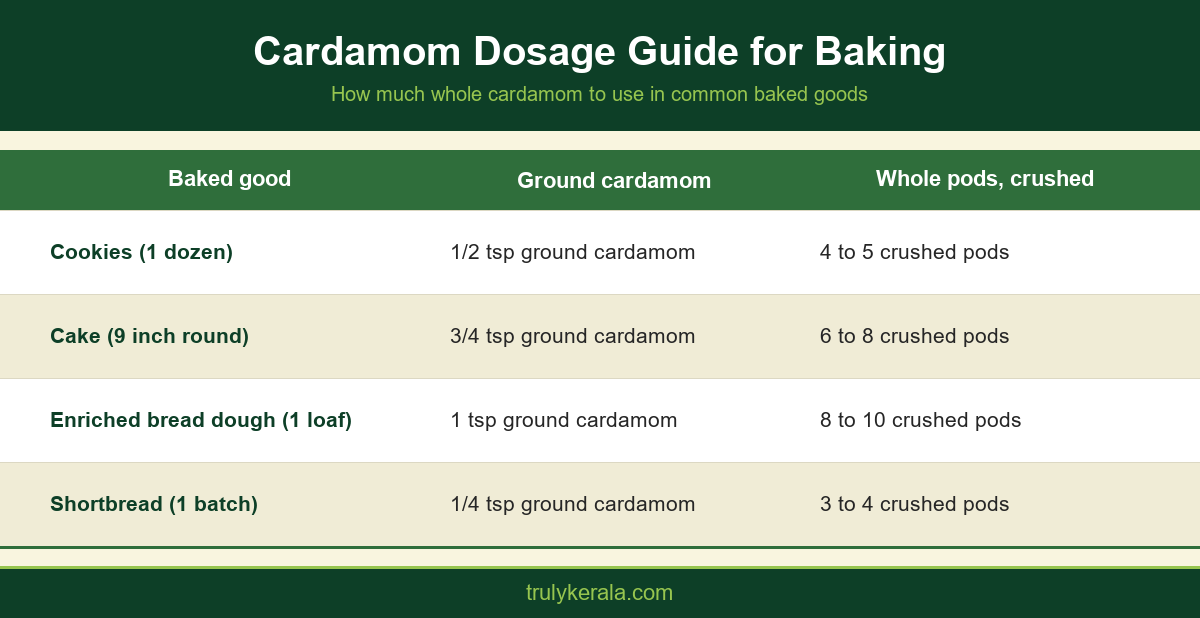
Most cardamom baking recipes call for somewhere between a quarter and one teaspoon of ground cardamom for a standard batch, whether that batch is a dozen cookies, a single 9 inch cake or one loaf of enriched bread. Because whole cardamom comes from the seed pods of a plant native to South India's Western Ghats, its essential oils sit mostly in the seeds, so crushing them fresh matters more than the amount you use. Doubling a recipe rarely means doubling the spice, since the oils are concentrated. Start at the lower end of the range, taste the batter if it is safe to do so, and adjust the next time you bake. Working from whole pods rather than a jar of ground spice, count on four to five crushed pods for a dozen cookies and six to eight for a full cake. Longer bakes, such as a loaf of bread that spends close to an hour in the oven, can handle slightly more cardamom than a quick tray of cookies, since some of the aroma cooks off along the way. Weigh the spice against other strong flavors in the recipe too. A cake batter already carrying orange zest or dark chocolate needs less cardamom than a plain butter cake, since those flavors compete for attention. The infographic below breaks the amounts down by baked good so you are not guessing at the store or in the kitchen.
Crushing Whole Pods vs Using Ground Cardamom
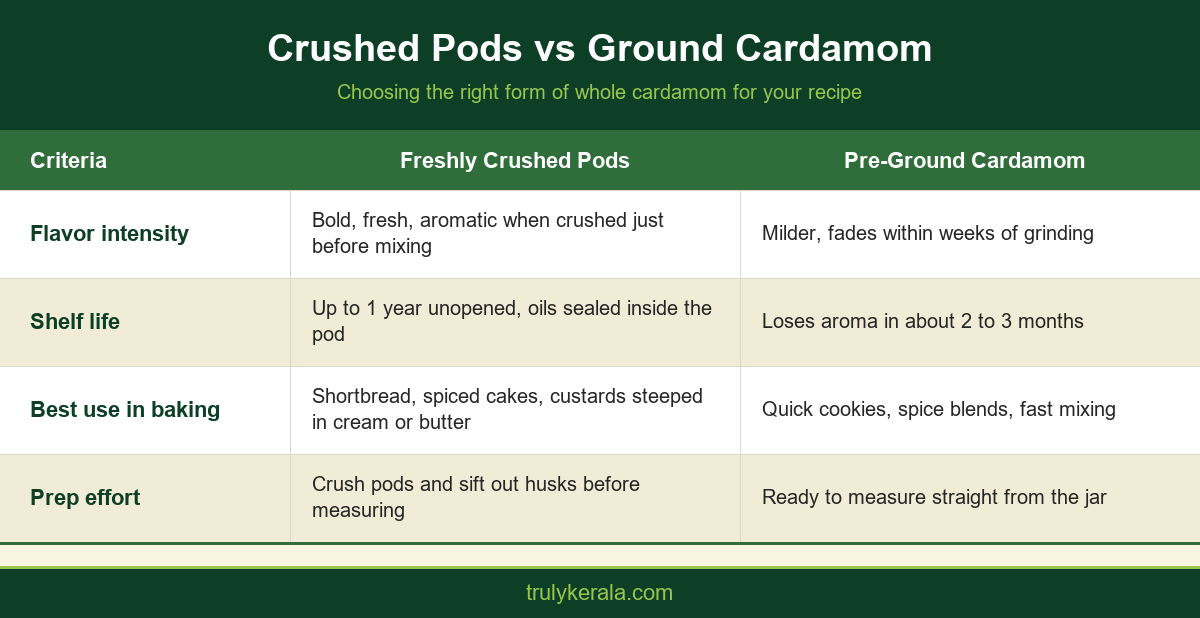
Both forms work in the oven, but they behave differently once heat and time are involved, and the right choice depends on how long your batter or dough will bake.
Whole pods, cracked open and crushed with the back of a knife or a mortar and pestle right before mixing, release essential oils that fade quickly once exposed to air. That immediacy makes crushed pods the better choice for longer bakes such as spiced cakes and enriched breads, where the flavor needs to survive an hour or more in the oven. Ground cardamom, on the other hand, disperses more evenly through a dry ingredient mix, which suits quick recipes like drop cookies or a spice blend kept on hand for weeknight baking. A useful middle path is to crush a larger batch of pods once a week and keep the crushed seeds in a small airtight jar, which still tastes fresher than pre ground spice bought months earlier while saving prep time on a busy baking day. If you bake often, it helps to learn how to select and store whole cardamom pods properly so the spice stays potent between bakes rather than fading in the back of the pantry.
Cardamom Cookies: Shortbread and Sugar Cookies
Cardamom cookies are some of the simplest cardamom baking recipes to start with, since the spice needs very little competition to come through in a bite of butter and sugar.
Shortbread is the easiest place to begin, since it has only butter, sugar, flour and a pinch of salt for cardamom to stand against. A quarter teaspoon of ground cardamom, or three to four crushed pods worked into the sugar before creaming, gives a shortbread round a warm, slightly citrusy edge without overwhelming the buttery crumb. Sugar cookies take a touch more, since the dough includes egg and a little leavening that dilutes the spice. Rolling the cut cookies in a cardamom sugar mix before baking, rather than only mixing it into the dough, adds a second layer of aroma the moment the tray comes out of the oven. Chilling the dough for at least thirty minutes before baking also helps, since it gives the cardamom time to infuse the butter fully instead of tasting scattered through the finished cookie.
Spiced Cakes: Pairing Cardamom with Butter, Citrus and Nuts
Cake batter is forgiving, and cardamom's warmth pairs naturally with ingredients already common in a spiced cake, from butter and cream to citrus zest and toasted nuts.
A cardamom cake recipe built on a classic butter cake base benefits from orange or lemon zest, which brightens the spice rather than competing with it. Toasted almonds or pistachios folded into the batter, or scattered on top before baking, add texture and echo cardamom's slightly nutty undertone. Because cardamom carries most of the flavor in a cake like this, sourcing pods that are still fragrant makes a visible difference in the finished slice. Options like whole cardamom pods sourced directly from Kerala growers are worth seeking out when the spice needs to do the heavy lifting. A light glaze made with citrus juice and sugar finishes the cake without masking the spice underneath. For a richer crumb, brown the butter before creaming it with sugar. The nutty notes from browned butter deepen cardamom's flavor rather than competing with it, which is part of why the two show up together so often in a cardamom cake recipe.
Cardamom in Global Desserts: A Quick Note
Cardamom is not only a Kerala spice used at home in Indian kitchens. It shows up in baked goods well beyond South Asia, and the same light touch works there too.
Scandinavian bakers fold cardamom into enriched, yeasted buns, while Middle Eastern kitchens use it in shortbread style cookies and semolina cakes soaked in syrup. The baking principles stay the same wherever the recipe comes from: whole cardamom, freshly crushed, tastes brighter than spice that has sat ground in a jar for months. For a deeper look at how different kitchens use the spice, our dedicated guide to cardamom in global cuisine covers the range from Scandinavia to the Middle East in more detail. King Arthur Baking's own cardamom bun recipe is a good example of how the spice performs in a slow, enriched dough, where a long proof gives the cardamom time to spread through every layer of the bun rather than sitting only near the surface.
Final Thoughts
Good cardamom baking recipes come down to a few habits: measure with a light hand, crush pods fresh when the bake is long, and let butter, citrus or nuts carry the rest of the flavor. Baking with whole cardamom rewards patience more than precision. Start light, choose crushed pods for longer bakes and ground spice for quick ones, and let the pairing with butter, citrus or nuts do the rest of the work. Whether you are testing your first batch of cardamom cookies or building out a full cardamom cake recipe, TrulyKerala's whole green cardamom gives you the fragrant, oil rich pods that make the difference. Explore TrulyKerala's spice collection to stock your pantry, or read about cardamom in warm drinks and mocktails if you want to bring the same spice beyond the oven.
Looking for traditional recipes instead? Browse our traditional Kerala recipes using whole green cardamom for classic sweets and savory dishes rather than baked goods.
Frequently Asked Questions
Is cardamom used in baking?

How much cardamom should I add to cookies?
Should I use whole pods or ground cardamom in cakes?
What flavors pair well with cardamom cake recipe ideas?
Can I substitute ground cardamom for whole pods?
Does baking with whole cardamom taste different from ground cardamom?
What baked goods use cardamom outside of India?
Is cardamom good for you when used in baking?
How do I crush whole cardamom pods for a recipe?
Can I make cardamom cookies without a stand mixer?