Cardamom Coffee & Mocktails: Brewing Kerala Spice into Modern Drinks

If your coffee routine feels ordinary, a good cardamom coffee recipe can change that in one brew. Ground or whole cardamom pods add a warm, citrusy note that turns a plain cup into something closer to a specialty drink. This guide skips the history lesson and focuses on technique: how to steep cardamom into hot coffee and cold brew, build a cardamom latte recipe with steamed milk, mix cardamom infused drinks into mocktails, and make a reusable cardamom simple syrup. It is written for home cooks who want cafe style results without new equipment or a long ingredient list. For readers curious about where this fits into a wider kitchen, we cover other modern culinary uses for cardamom separately. Every method below uses whole pods and tools most home kitchens already have, so there is nothing extra to buy before you start.
Key Takeaways
- A few whole cardamom pods, cracked open, infuse coffee grounds or cold brew with flavor without any special equipment or long prep time.
- Cardamom simple syrup is the fastest way to add a cardamom mocktail or cardamom latte recipe to your routine, since one batch covers both.
- Whole pods give a cleaner, less bitter flavor than pre ground cardamom in hot and cold coffee alike, and they store far longer on the shelf.
- This cardamom coffee recipe and its variations take fifteen minutes or less, aside from the overnight rest that cold brew needs.
Why Whole Cardamom Belongs in Your Coffee Cup
Coffee and cardamom have paired well for centuries, most famously in Arabic qahwa, where lightly roasted beans and crushed pods are simmered together. That cultural pairing is worth a mention here, not a deep dive. What matters for a modern kitchen is why the combination still works: cardamom's essential oils are aromatic rather than bitter, so they round out coffee's sharp edges instead of masking them. Specialty cafes from Scandinavia to the Gulf have picked up on this, folding cardamom into espresso drinks, cold brews, and steamed milk, often alongside cinnamon or vanilla for a rounder flavor. It is a different use case from cardamom tea, which relies on long simmering rather than a quick infusion during brewing. To see how the spice moves across other cuisines and desserts, our guide to cardamom's place in global kitchens is a good next read. For coffee specifically, the only real requirement is starting with whole pods rather than pre ground powder, since whole pods hold their aromatic oils far longer and give you control over how strong the spice comes through.
Brewing the Perfect Cardamom Coffee at Home
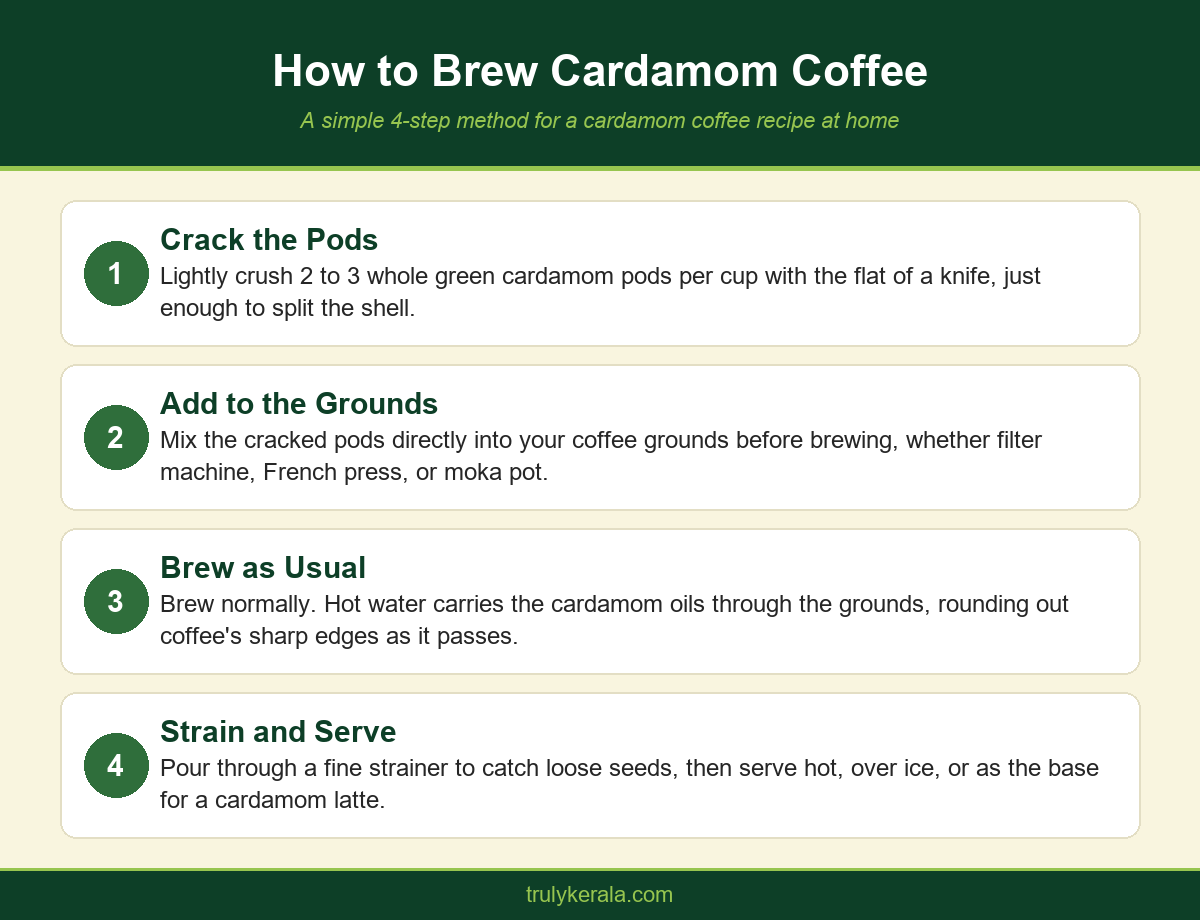
Making cardamom coffee at home starts with two or three green cardamom pods per cup, lightly crushed with the flat of a knife to crack the shell without pulverizing the seeds. Add the cracked pods directly to your coffee grounds before brewing, whether you use a filter machine, a French press, or a moka pot. The pods release their oils as hot water passes through, giving a smooth, spiced finish without extra bitterness. If you are new to working with whole spices, our spice pairing basics for beginners guide covers ratios and storage tips that apply here too. For general brewing ratios, the National Coffee Association's coffee brewing basics are also a useful reference. For a stronger flavor, split the pods open fully and let them steep with the grounds for the entire brew cycle, or add a single crushed pod to an already brewed cup if you prefer a lighter touch. A medium roast tends to let the spice come through more clearly than a dark roast, which can compete with cardamom's aroma. Strain well before serving, since loose seeds can make the last sip gritty, and keep any leftover cracked pods in an airtight jar for up to a month.
Cardamom Cold Brew: A Slow Infusion for Modern Palates
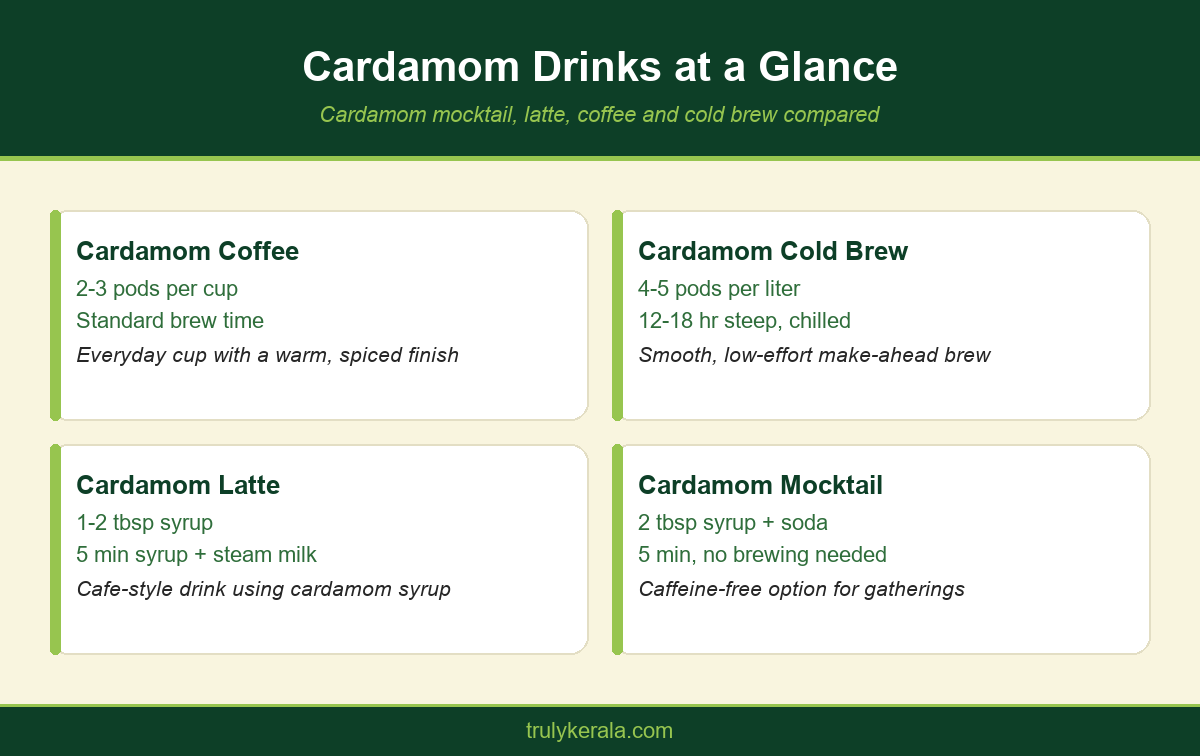
Cold brew rewards patience, and cardamom fits naturally into that slower process. Add four to five cracked pods per liter of water to your coarse coffee grounds before steeping, then leave the jar in the refrigerator for twelve to eighteen hours. The extended contact time pulls out cardamom's aromatic compounds gently, without the sharpness that can come from boiling the spice. Strain through a fine mesh or cheesecloth, then serve over ice with milk, plant milk, or on its own. This method suits anyone who wants a cardamom coffee recipe with almost no morning effort, since the brewing happens overnight and needs no attention until it is time to strain. It also holds well in the refrigerator for up to a week, making it easy to prepare one batch and pour a fresh glass daily. If the concentrate tastes too strong once diluted with ice, cut it further with water or milk rather than reducing the steep time, since a shorter steep tends to taste flatter rather than simply weaker. Batch a full jug on a Sunday and it becomes a ready base for iced lattes, mocktails, or a plain glass over ice through the whole week.
Cardamom Lattes: From Simple Syrup to Steamed Milk
A cardamom simple syrup is the easiest way to build a reliable cardamom latte recipe without measuring spice into every cup. Simmer equal parts sugar and water with six to eight crushed pods for five minutes, then let the syrup cool and strain out the solids. Store it in the refrigerator for up to two weeks. To build the latte, pour one to two tablespoons of syrup into a cup, add a shot of espresso or strong filter coffee, then top with steamed or frothed milk, dairy or plant based both work well, though oat milk tends to foam most reliably. The same syrup works well beyond coffee too, and it is close to the flavor base behind our cardamom spiced baked treats. For the freshest results, start with whole green cardamom pods rather than pre ground spice, since freshly cracked pods make a noticeably brighter syrup, and a light dusting of extra crushed cardamom on the foam adds a nice finishing touch for guests.
Non-Alcoholic Cardamom Mocktails for Every Occasion
Cardamom syrup also forms the base of a good cardamom mocktail, and it takes minutes to put together. Mix two tablespoons of syrup with fresh lime juice, a splash of ginger cordial, and chilled soda water, then pour over ice and garnish with a cracked pod or a mint sprig. Swap the soda water for tonic if you want a slightly more bitter finish, or blend the syrup into iced tea for a lighter option. A cardamom lemonade works the same way, just swap the ginger cordial for extra lemon juice and a touch more syrup to balance the tartness. For a party, mix a larger batch of syrup, juice, and cordial in a jug ahead of time and top individual glasses with soda water just before serving, so the fizz stays fresh. These cardamom infused drinks work well for brunches, festive gatherings, or simply as a caffeine free alternative later in the day. Because the syrup keeps for two weeks, one batch covers several rounds of experimenting with ratios until you find the balance of sweet, tart, and spiced that you like best.
Conclusion
A good cardamom coffee recipe does not need rare ingredients or barista training, just whole pods, a little patience, and a syrup you can reuse across drinks. Whether you are brewing a spiced filter coffee, building a slow cold brew, steaming a latte, or shaking together a mocktail for guests, the same handful of pods carries every version, and the syrup ties them all together. Start with one method this week, keep a jar of syrup on hand, and build from there as you find the ratios you like. Once you get comfortable cracking pods and steeping syrup, switching between a morning coffee and an evening mocktail takes almost no extra effort. If you would rather explore the traditional route, our guide to traditional Kerala cardamom recipes is a good companion piece. Ready to start brewing? Shop the full TrulyKerala range for whole green cardamom sourced directly from Kerala farms.
Frequently Asked Questions
What is the best cardamom coffee recipe for beginners?

Can I use ground cardamom instead of whole pods?
How long does cardamom simple syrup last?
What makes a good cardamom mocktail base?
Is cardamom coffee good for digestion?
Does cardamom cold brew taste different from hot cardamom coffee?
How many cardamom pods should I use per cup of coffee?
Can cardamom lattes be made without an espresso machine?
Are cardamom drinks good for daily drinking?
What is qahwa, and is it the same as a modern cardamom coffee recipe?