Cooking with Cardamom: A Beginner's Spice Guide

Cardamom sits in half the world's spice racks, yet most home cooks never open the pod. Learning how to use whole cardamom with confidence comes down to one simple skill: knowing when to reach for a whole pod, when to crack it open, and when premium whole cardamom pods work better than ground powder. This guide covers buying, crushing, dosing, and storing cardamom so every dish gets the right amount of flavor, without the guesswork. Whether you are simmering a pot of chai, baking a batch of cookies, or building a spice blend from scratch, the same fundamentals apply.
Key Takeaways
- Whole pods hold their aroma far longer than ground cardamom, so buy pods and grind only what a recipe needs.
- A cardamom spice guide really comes down to quantity: most dishes need only a few pods or a small pinch of ground powder per serving.
- Store pods in an airtight container away from heat and light to protect the essential oils that carry their flavor.
Whole Pods, Loose Seeds, or Ground Powder: What Is the Difference?
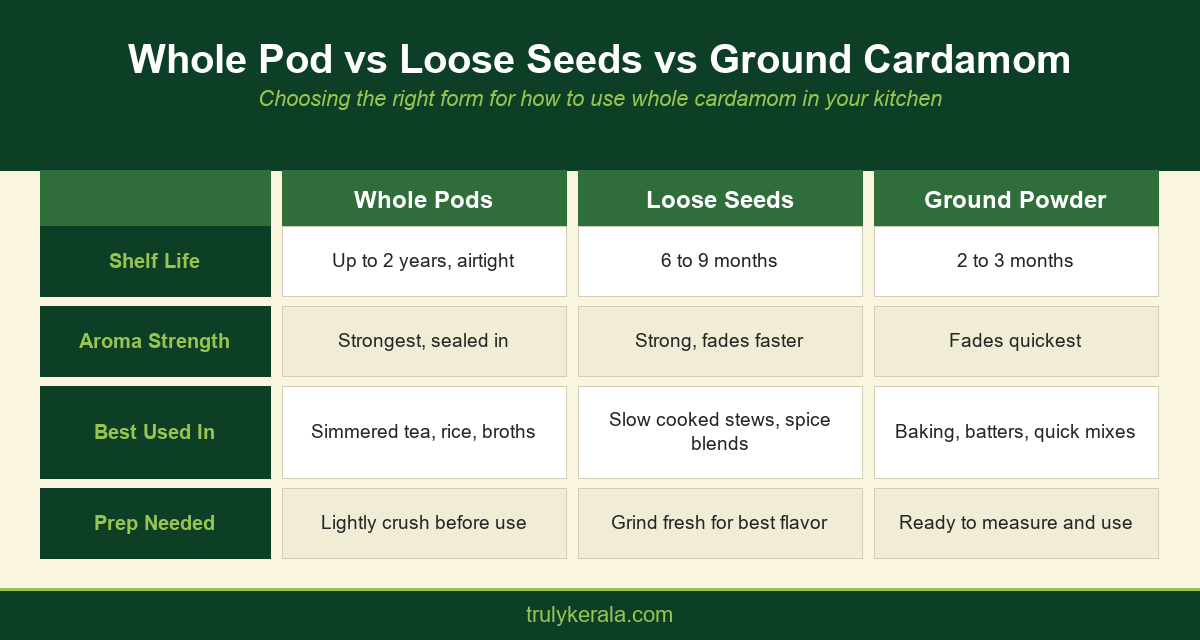
Cardamom comes in three forms, and each one behaves differently in a pot, a batter, or a cup of tea. Understanding whole vs ground cardamom is the first step to using the spice well.
A whole pod is a small green shell that seals in tiny black seeds along with the essential oils that carry cardamom's aroma. Left closed, a pod stays fragrant for close to two years, which is why whole pods are the most reliable form to keep on hand. Cracking the pod open exposes the loose seeds inside, releasing more flavor immediately but shortening how long that flavor lasts. Ground powder is made by crushing those seeds fully, and while it is the most convenient option for baking, it also fades the fastest. Cardamom is a member of the ginger family native to South India, and its pods were historically dried whole for exactly this reason: freshness travels better sealed than ground.
When buying whole pods, look for a bright, even green color and a pod that feels slightly heavy for its size, both signs of good moisture content and proper storage. Pods that look pale, papery, or cracked have usually sat on a shelf too long and will taste flat. Because whole pods travel and store so well, they are typically the better starting point for anyone new to cooking with cardamom, since there is more room for error before flavor fades. A quick pinch test, rolling a pod between two fingers, should release a faint but noticeable scent even before it is cracked open.
How to Crush and Grind Cardamom the Right Way
Getting the flavor out of a cardamom pod is really the starting point for how to use whole cardamom well, and getting this one step right changes how the finished dish tastes.
To release aroma from a whole pod, press it gently with the flat side of a knife or a mortar and pestle until the shell cracks. For dishes like simmered tea or rice, the cracked pod can go in as is and be removed before serving. For baking, the seeds need to come out of the shell entirely and be ground fresh in a small spice grinder, since pre ground powder loses potency within weeks of grinding. Bakers building cardamom spiced cookies and cakes almost always get better results from seeds ground the same day rather than powder bought months earlier.
A small electric spice grinder works well for larger batches, while a mortar and pestle gives more control when grinding just a pod or two. Either way, grind only as much as a recipe calls for, since exposed surface area speeds up how quickly the aroma fades. If a recipe simply lists ground cardamom without a quantity, treat roughly an eighth of a teaspoon per pod as a reasonable starting point.
How Much Cardamom to Use: Sweet vs Savory Dosing
Cardamom is potent, and the right quantity changes depending on whether a dish is baked in minutes or simmered for hours.
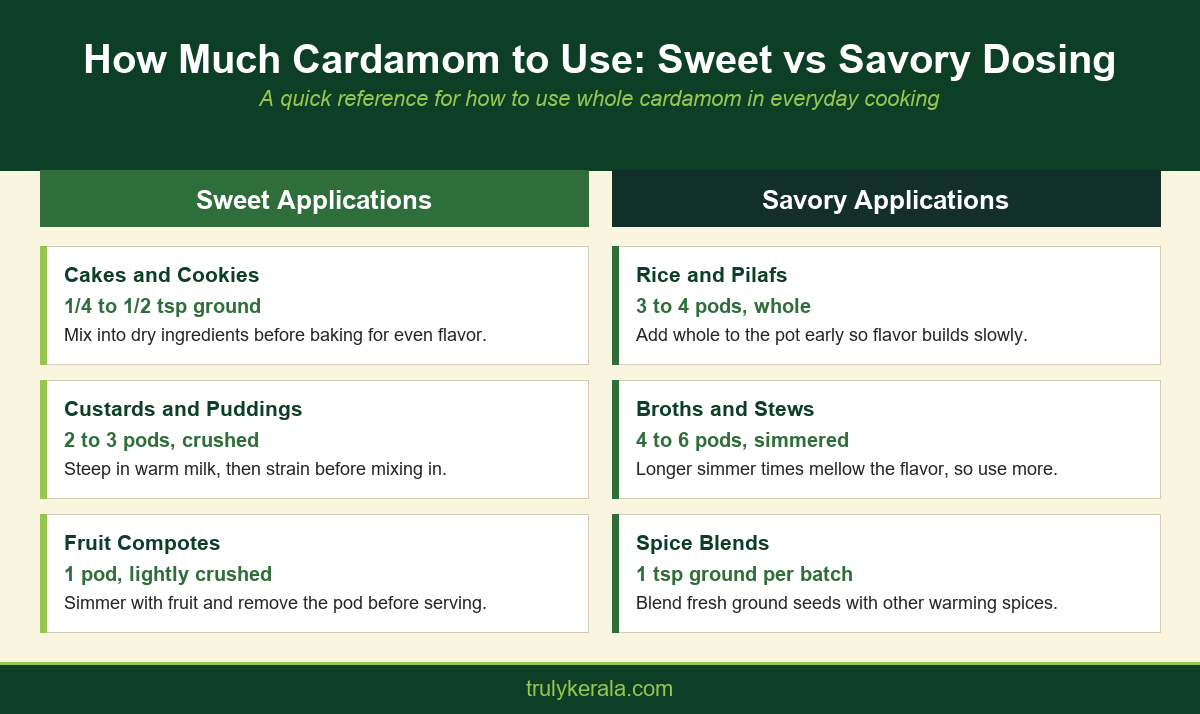
Sweet applications call for a light hand. A cake or batch of cookies rarely needs more than a quarter to a half teaspoon of ground cardamom, since heat and sugar both intensify the flavor as they cook. Savory dishes can handle more, because long simmer times mellow cardamom's sharper notes. A pot of rice or a slow simmered broth might use four to six whole pods without becoming overpowering. Readers exploring modern cardamom recipes will notice this same rule applied across both baked goods and stovetop dishes: start small, taste often, and adjust.
Drinks fall somewhere in between the two. A pot of tea or a pitcher of infused water typically needs only one or two lightly crushed pods, since the liquid draws out flavor gradually as it steeps. Oversteeping is the most common beginner mistake, since cardamom can turn faintly bitter if pods sit in hot liquid too long without being strained out. At its core, how to use whole cardamom in any drink comes down to steeping time and pod count, not fancy technique.
Hot Applications vs Cold Applications
Cardamom works differently depending on whether it meets heat first or goes straight into a cold preparation.
Hot applications, like simmering pods in milk for tea or baking ground seeds into a batter, pull oils out slowly and mellow the flavor over time. Cold applications work faster and sharper: crushed pods steeped briefly in a cold brew concentrate, or a pinch of ground cardamom whisked into whipped cream, deliver a brighter, more immediate hit of flavor. This distinction matters most for drinks, where a splash of cardamom spiced coffee and mocktails can go from balanced to overpowering with just one extra pod. Global kitchens apply the same principle in different ways, from Scandinavian and Middle Eastern cardamom dishes to spiced breads and slow braises.
Cold desserts such as ice cream bases or overnight oats benefit from steeping crushed pods in cold liquid overnight, which slowly draws out flavor without any heat at all. This patient approach produces a rounder, softer result than stirring ground cardamom directly into a cold mixture, where the flavor can taste dusty rather than fresh.
Storing Whole Cardamom and Where to Go Next
Good storage protects the investment in quality pods, and knowing where to apply that skill next rounds out this cardamom spice guide.
Keep whole pods in an airtight glass jar, away from direct sunlight and stove top heat, and they will stay aromatic for close to two years. Ground cardamom should be treated as a short term ingredient, used within two to three months for the best flavor. The Spices Board of India notes that proper drying and storage are what protect a spice's essential oils long after harvest, and the same principle applies at home. Once the basics of buying, crushing, and dosing feel comfortable, it is worth exploring TrulyKerala's full spice and snack collection to source consistent, high quality pods for every application. Readers who want classic dishes instead of technique can also browse traditional Indian cardamom recipes for inspiration built around this same spice.
Glass jars with tight fitting lids work better than plastic bags, which let in air and speed up flavor loss. Some cooks freeze whole pods in a sealed container for even longer shelf life, though this step is rarely necessary if pods are used within a year or two of purchase.
Conclusion
Once you know how to use whole cardamom with confidence, choosing between pod, seed, and powder, crushing correctly, and dosing by dish, cardamom stops being intimidating and becomes one of the easiest spices to cook with well. Store it properly and it keeps rewarding you for months. Whichever dish you start with, these same fundamentals apply every time you reach for a pod. Ready to put this guide into practice? Shop premium whole cardamom pods from TrulyKerala and start building flavor from the pod up.
Frequently Asked Questions
How do you use whole cardamom in cooking?

Should I remove the cardamom pod before eating?
What is the difference between whole and ground cardamom?
How many cardamom pods equal one teaspoon of ground cardamom?
Can you use cardamom seeds without grinding them?
How long does whole cardamom last once opened?
Is green cardamom the same as black cardamom?
Can cardamom be used in both sweet and savory dishes?
What is the best way to buy high quality whole cardamom?
Does cardamom quality affect its health benefits?